
Depression relapse is something many people face, and recognizing it early can make a real difference.
Research shows that between 27% and 49% of people who recover from a major depressive episode will experience a recurrence within a few years, often beginning with subtle changes in sleep, mood, and motivation long before a full episode takes hold.
This article walks through 13 of the most clinically meaningful signs that depression may be coming back, so you can act early rather than wait for things to get worse.
Depression Relapse Signs: What to Watch For?
Depression rarely returns all at once. The strongest evidence from longitudinal research suggests it usually comes back as a gradual drift, a familiar heaviness that builds through residual symptoms that never fully resolve.
You might notice that things feel harder, less enjoyable, or that your sleep has quietly shifted before you would ever describe yourself as “depressed again.”
Understanding the difference between a rough week and a genuine depression relapse is not always easy. But there are patterns worth knowing.
A relapse is generally defined as a return of depressive symptoms within about six months of recovery, while a recurrence refers to a new episode after a longer period of wellness.
From a practical standpoint, the early warning signs look similar in both cases, and the most important thing is to recognize them early rather than debate the label.
13 Signs of Depression Relapse
1. Sleep is Changing Again
Sleep disturbance is one of the highest-yield early warning signs of depression relapse. It may show up as trouble falling asleep, waking too early, sleeping far more than usual, or a gradual drift in your sleep schedule.
CANMAT clinical guidelines list disruptions to the sleep-wake cycle as a direct risk factor for recurrence, and bipolar prodrome research consistently identifies sleep change as one of the earliest detectable signals before a mood episode fully develops.
Two or more weeks of worsening sleep, especially when paired with lower motivation or less pleasure, is worth taking seriously rather than waiting out.
2. Nothing Feels Enjoyable Anymore
Loss of interest or pleasure, known clinically as anhedonia, is one of the most meaningful early signs that depression is coming back. It often shows up before overt sadness does.
You might notice that hobbies feel flat, that you are going through the motions, or that things you were beginning to enjoy again have quietly lost their pull.
Research on adolescent depression found that anhedonia predicted both illness severity and poorer recovery outcomes, and reward-circuit neuroscience supports the idea that this symptom reflects a real biological shift rather than just a bad attitude.
In adults with recurrent depression, “nothing feels rewarding” may be a more clinically significant early signal than sadness alone.
3. Familiar Negative Thoughts Are Returning
One of the clearest signs that depression is coming back is the return of a recognizable thought pattern. You may notice:
- more self-critical thinking than usual
- hopeless predictions about the future
- ruminating on past mistakes at night
- a sense that nothing will help or improve
- difficulty seeing situations in a balanced way
Cognitive therapy follow-up research identifies negative depressive cognitions as a strong predictor of relapse and recurrence.
The thoughts do not have to be dramatic to matter. A quiet return of pessimism or self-blame is worth noticing.
4. Motivation Has Dropped Significantly
Low motivation in depression relapse is not laziness. It often reflects a convergence of lower reward expectancy, psychomotor slowing, and depleted self-regulation.
You might find yourself knowing exactly what you should do but being unable to get started. Tasks that felt manageable a few weeks ago now feel like too much effort.
This motivational collapse tends to appear early in the relapse process and can be easy to rationalize as stress or busyness rather than a symptom.
5. You Are Withdrawing From People
Social withdrawal is both a symptom of returning depression and a factor that makes it worse.
When you stop replying to messages, cancel plans more often, or feel less interested in people you normally enjoy, it can signal that depression is gaining ground again.
Poor social support is listed in CANMAT recurrence risk factors as both a predictor and a consequence of depressive return. Isolation removes the external feedback and connection that can help interrupt a relapse early.
6. Concentration and Decision-Making Are Harder
Cognitive symptoms often appear quietly in the early stages of depression relapse. You might notice:
- difficulty focusing at work or school
- taking longer to make simple decisions
- forgetting things more often
- a general mental fog or slowing
These changes can be easy to attribute to stress or poor sleep, but when they appear alongside other signs on this list, they are worth tracking.
Cognitive slowing and indecision are consistent features of returning depression across multiple research branches.

7. Fatigue Feels Different From Normal Tiredness
The fatigue of depression relapse is not the same as being tired after a busy week. It tends to feel heavier, more persistent, and less responsive to rest.
People often describe it as feeling drained before the day has started, or as though ordinary tasks require disproportionate effort.
Psychomotor slowing and low energy are among the most replicated features of returning depression, and they often appear alongside sleep disturbance and motivational decline rather than in isolation.
8. Irritability or Anxiety Has Increased
Depression does not always return quietly. Some people notice increased irritability, restlessness, or anxiety before they would describe themselves as sad.
You might feel more reactive to small frustrations, more tense in situations that would not normally bother you, or more prone to worry.
This is especially worth noting because irritability can be mistaken for stress or relationship problems rather than recognized as a depression relapse symptom.
In adolescents, irritability is a particularly common presentation of returning depression.
9. Daily Functioning Has Slipped
Functional decline is often one of the most reliable real-world indicators of depression relapse because it captures multiple symptom systems at once. Signs include:
- missing deadlines or appointments
- reduced hygiene or self-care
- falling behind on household tasks
- declining performance at work or school
- not responding to messages for days
Psychosocial impairment has been shown to predict recurrence of major depression, and functional decline often precedes the point at which someone would describe themselves as fully depressed again. Families and coworkers sometimes notice this before the person does.
10. Residual Symptoms Are Getting Worse
One of the strongest predictors of depression relapse is residual symptoms that never fully resolved after the last episode.
Research by Verhoeven and colleagues found that tracking the course of residual depressive symptoms can help predict patterns of relapse and recurrence.
If you have been carrying low-level fatigue, mild sleep problems, or occasional hopelessness since your last episode, a worsening of those same symptoms is a meaningful early signal.
This is why full remission matters clinically. Subthreshold symptoms are not benign. They are often the bridge between recovery and relapse.
11. You Are Using Substances More to Cope
Increased alcohol or drug use can both signal and worsen a depression relapse. When depression starts returning, some people drink more to sleep, use cannabis to manage anxiety, or rely on other substances to get through the day.
NIMH notes that the relationship between substance use and mental health is bidirectional, meaning each can drive the other.
If you notice that your substance use has quietly increased alongside other signs on this list, it is worth treating these as part of the same picture rather than separate issues.
12. Hopelessness is Creeping Back
Hopelessness deserves its own entry because it carries particular clinical weight. It is not just a mood; it is a cognitive shift that can persist even when other depressive symptoms begin to improve, and it is closely linked to suicidal risk.
Signs of returning hopelessness include feeling that treatment will not work again, believing that improvement is not possible for you, or sensing that the future holds nothing worth looking forward to.
When hopelessness returns, it is one of the clearest signs that depression is coming back and that prompt action is needed.
13. Thoughts of Death or Suicide Are Appearing
Any return of suicidal thoughts, passive wishes to not be here, or thoughts of death requires immediate attention.
NICE guidelines are clear that clinicians should always ask directly about suicidal ideation and intent, and that treatment should not be withheld because of suicide risk.
If you are experiencing these thoughts, contact your clinician, call or text 988 to reach the Suicide and Crisis Lifeline, or go to your nearest emergency department.
A safety plan, developed in advance with a clinician, can make this step easier when it matters most.
Why Depression Relapse Follows a Pattern?
The research is consistent on one point: depression relapse is usually not random. It tends to follow a recognizable pattern shaped by your own history, residual symptoms, sleep, cognition, and stress context.
A key insight from the longitudinal literature is that people who have had depression before often have a personal relapse signature, a set of early changes that appear in roughly the same order each time.
One person’s first sign might be waking at 4 a.m. Another’s might be losing interest in music. A third person might notice they have stopped replying to texts.
The AIMS Center relapse prevention framework recommends identifying your own warning signs collaboratively with a care provider, because individualized early detection is more reliable than generic symptom lists alone.
Bipolar prodrome research supports this too, finding that patients can often identify their own prodromal symptoms when they have been taught to look for them.
When Depression Relapse Signs Might Mean Something Else?
Not every return of low mood is a straightforward depression relapse. A few important distinctions are worth keeping in mind.
If you notice significantly reduced need for sleep alongside unusual energy, racing thoughts, impulsive behavior, or agitation, this may not be unipolar depression returning at all.
It could signal a bipolar spectrum episode or a mixed state. CAMH bipolar guidelines and related clinical resources emphasize that mixed states and hypomania are frequently missed, and that treating what looks like depression with antidepressants alone can be harmful if bipolar features are present.
Similarly, if depression symptoms return after a significant loss, it is worth considering whether prolonged grief disorder may be part of the picture. Grief and depression overlap substantially in their symptoms, but they respond to different treatments.
What to Do When You Notice the Signs?
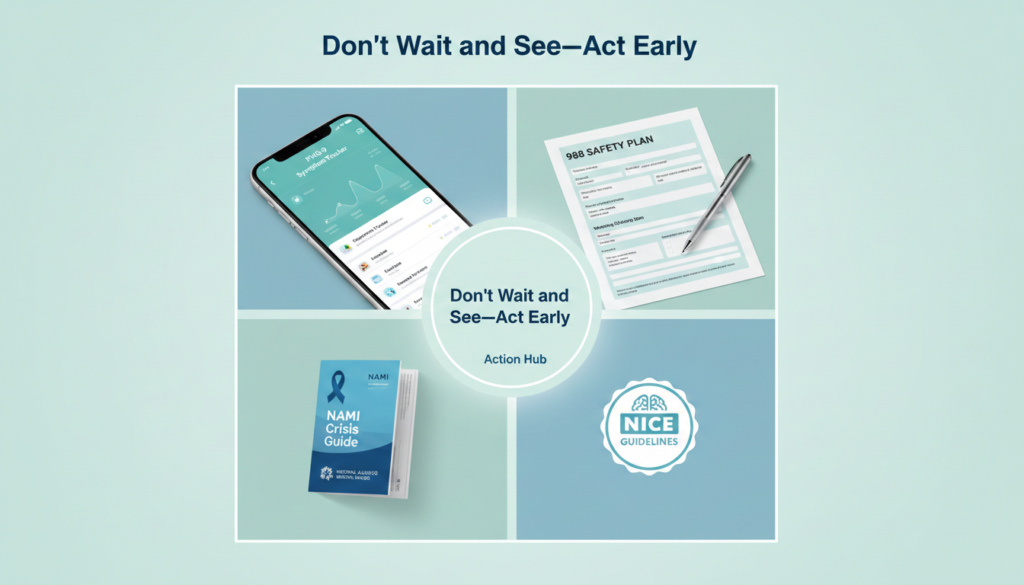
The most evidence-supported response to early depression relapse signs is not to wait and see. It is to notice and act.
Practical steps include:
- contacting your clinician or therapist as soon as you notice two or more warning signs persisting for one to two weeks
- reviewing your medication if you are on antidepressants, since NICE recommends follow-up within two to four weeks of any treatment change
- using a validated tool like the PHQ-9 to track symptom changes over time
- reviewing your sleep, activity level, and social contact as a weekly check-in
- having a safety plan in place before you need it, using a structured format like the 988 safety plan template
The NAMI crisis guide also recommends preparing a relapse plan in advance, including your personal warning signs, coping strategies, and the names of people to contact.
Having that plan ready means you do not have to figure it out when you are already struggling.
The Bottom Line on Depression Relapse Symptoms
Depression relapse is best understood as a process of gradual reactivation, not a sudden crash.
The signs that depression is coming back tend to cluster around reward loss, sleep disruption, behavioral withdrawal, cognitive pessimism, and functional decline.
Recognizing that cluster early, before a full episode reassembles, is one of the most evidence-supported things you can do for your long-term mental health.
If you are seeing several of these signs in yourself or someone you care about, reaching out for professional support sooner rather than later is the right move. You do not need to wait until things are severe to ask for help.
If you are in Georgia and looking for structured support that addresses both depression and any co-occurring concerns, the team at Summit Wellness Group offers depression treatment programs designed around your individual needs. So, call our team today!

