
Anxiety can feel overwhelming, especially when you don’t know what’s driving it.
The truth is, anxiety emerges from a complex mix of genetic vulnerability, brain chemistry, chronic stress, and everyday lifestyle choices, and understanding these factors is the first step toward managing symptoms.
This article breaks down the most common causes of anxiety, from inherited risk to modifiable triggers like diet and substance use, so you can identify what applies to you and take action.
Genetic and Biological Foundations of Anxiety
Your genes play a significant role in anxiety risk, though they don’t act alone. A 2026 genome-wide study identified 58 genetic variants linked to major anxiety disorders, with 51 replicating in an independent sample of over 3 million people.
These variants influence GABAergic signaling, the brain’s main inhibitory system that helps regulate worry and hyperarousal.
Anxiety runs in families not because of a single “anxiety gene” but through hundreds of small genetic effects that overlap with depression and neuroticism.
SNP-based heritability accounts for about 10% of anxiety risk, roughly one-quarter of what twin studies suggest, meaning environment and experience fill the gap. If you have close relatives with anxiety or depression, you carry higher baseline vulnerability, but that doesn’t guarantee you’ll develop a disorder.
Brain Circuits That Regulate Fear and Worry
Brain structure and connectivity also matter. Research shows that people with higher genetic risk for anxiety have reduced surface area in the anterior cingulate cortex, a region critical for conflict monitoring and emotion regulation. Smaller ACC volume may lower your threshold for sustained worry under stress.
Resting-state brain imaging in social anxiety disorder reveals altered connectivity between the amygdala and precuneus, scaling with symptom severity across patients and controls.
These patterns suggest anxiety exists on a spectrum rather than as a categorical brain defect, and that neural differences are probabilistic, not deterministic.
Environmental and Social Drivers of Anxiety
While biology sets the stage, chronic environmental stress often tips the balance. Two of the most potent, modifiable population-level causes are economic insecurity and minority stress.
Economic Worry as a Transdiagnostic Process
Financial vulnerability predicts worse mental health with meaningful effect sizes. Losing income corresponds to a 27% higher prevalence of moderate to severe anxiety, while lack of savings is associated with odds ratios around 2.61.
Economic worry functions like generalized worry, sustaining hypervigilance and perceived uncontrollability, core elements of anxiety disorders.
Higher household income correlates with lower psychological distress, and the relationship is dose-dependent. For many people, anxiety is a rational response to chronic instability rather than an intrinsic flaw.
Minority Stress and Intersectionality
Discrimination, stigma, and social threat exposures cluster in marginalized communities and compound anxiety risk.
A 2024 structural equation model across gender identity and race/ethnicity found that anxiety and depression are partly explained by indirect effects of minority stressors, with intersectional heterogeneity in how stress translates to symptoms.
The same exposure carries different psychological load depending on intersecting identities, histories, and contexts. At a population level, minority stress represents a significant, modifiable contributor to anxiety burden, especially when combined with economic insecurity.
Medical Conditions That Cause or Worsen Anxiety
Anxiety can be the direct result of medical conditions or substance effects, making differential diagnosis essential.
Thyroid Dysfunction, Anemia, and Vitamin Deficiencies
Hyperthyroidism increases adrenergic tone and can mimic or cause panic attacks. Anemia reduces oxygen delivery to the brain, contributing to fatigue and anxiety.
Vitamin B12 deficiency produces neuropsychiatric symptoms including anxiety and cognitive changes.
Clinical guidelines recommend targeted labs, TSH for thyroid function, hemoglobin and hematocrit for anemia, and vitamin B12, when history or symptoms suggest these contributors.
Correcting these abnormalities often reduces anxiety symptoms by addressing the underlying physiological stressor.
Cardiac and Pulmonary Mimics
Palpitations are a common anxiety symptom but also a red flag for arrhythmias, pulmonary embolism, or other life-threatening conditions.
A primary care evaluation includes careful history, ECG, and targeted labs, with urgent referral for syncope, chest pain, or sustained tachyarrhythmia.
Distinguishing benign from dangerous causes prevents misattributing medical pathology to “anxiety” alone and ensures appropriate treatment.
Substance and Medication-Induced Anxiety
Certain substances and medications can directly precipitate anxiety symptoms during intoxication or withdrawal.
Common Culprits
DSM-5 defines substance/medication-induced anxiety disorder when prominent anxiety or panic symptoms are the direct physiological effect of a drug of abuse, medication, or toxin.
Examples include stimulants, high-dose caffeine, some antidepressants early in treatment, and withdrawal from sedatives or alcohol.
Timing relative to use or withdrawal is critical for diagnosis. Identifying and stopping the offending substance often resolves symptoms, avoiding prolonged, ineffective psychiatric management.
How Lifestyle Factors Affect Anxiety?
Everyday choices around diet, cannabis use, sleep, and physical activity can amplify or attenuate anxiety symptoms.
Ultra-Processed Foods and Metabolic Pathways
Higher intake of ultra-processed foods is prospectively associated with increased risk of anxiety disorders. A UK Biobank analysis found that UPF consumption predicted incident anxiety and other mental disorders, with item-level associations to specific GAD-7 symptoms.
A circulating metabolomic signature of UPF intake independently predicted incident disorders and partially mediated the association, strengthening the case for biological mechanisms.
Proposed pathways include diet-induced inflammation, metabolic dysfunction like insulin resistance, and additive effects on monoamine signaling. UPFs’ macronutrient profiles, high sugars and saturated fats, low fiber, contribute to systemic inflammation and cerebrovascular risk, both of which affect anxiety-related neural circuits.
What you can change: Audit your diet for UPFs using NOVA categories (sodas, packaged snacks, ready-to-eat meals, reconstituted meat products).
Replace with minimally processed staples like vegetables, fruits, legumes, whole grains, nuts, and unprocessed proteins. Even partial substitution, replacing 10 to 20% of daily energy from UPF, may compound benefits over time.
Cannabis Use Patterns and Potency
Longitudinal evidence links baseline cannabis use to modestly increased risk of later anxiety disorders. A meta-analysis of cohort studies found pooled odds ratios around 1.25 for developing any anxiety condition, attenuating to 1.15 under stricter diagnostic criteria but remaining statistically significant.
Product potency matters. High-potency cannabis use is associated with greater odds of generalized anxiety disorder (adjusted OR approximately 1.92) and more frequent cannabis-related problems, even after adjusting for frequency of use and adolescent psychopathology.
What you can change: If you use cannabis and experience anxiety, consider a structured trial of dose reduction, lower-potency product substitution, or cessation, with close symptom tracking using weekly GAD-7 scores. Both frequency and potency are modifiable levers with plausible benefits for anxiety risk and trajectory.
The Gut-Brain-Microbiome Axis
Emerging evidence suggests that gut microbiota composition influences anxiety symptoms through neuroimmune and neuroendocrine pathways.
Clinical cohorts with generalized anxiety disorder show altered microbiota profiles, and fecal microbiota transplantation from social anxiety disorder patients into mice increases social fear responses and alters central oxytocin expression.
Meta-analyses of randomized trials indicate that probiotic, prebiotic, and synbiotic interventions produce modest improvements in anxiety symptoms in some populations, though heterogeneity in strains and doses persists.
Food-first strategies, increasing dietary fiber diversity and fermented foods, may be practical starting points that dovetail with UPF reduction to shift both macronutrient profile and microbial ecology.
Why Some People Develop Anxiety While Others Don’t?
Anxiety emerges when cumulative load exceeds an individual’s adaptive capacity. This threshold model integrates:
- Baseline liability: Polygenic risk and circuit-level features like smaller ACC surface area reduce regulatory reserve.
- Environmental loading: Chronic economic worry and minority stress increase frequency and intensity of perceived threats.
- Proximal triggers: Acute stressors, medical illnesses, or substance effects precipitate symptom spikes.
- Crossing the threshold: When cumulative load breaches adaptation capacity, clinically impairing anxiety emerges.
People differ in how these components co-occur and sum over time. The same exposure yields different outcomes depending on ancestry, gender identity, race/ethnicity, and their intersections, reflecting both social distribution of exposures and biological differences in baseline risk or stress reactivity.
A Practical Plan to Reduce Anxiety Triggers
Based on converging evidence, the highest-yield changes for many people are:
1. Reduce ultra-processed food consumption and shift to minimally processed dietary patterns rich in fiber and fermented foods.
2. Moderate cannabis frequency and potency or discontinue use when feasible, tracking symptoms with validated tools.
3. Address medical contributors through targeted labs (TSH, vitamin B12, hemoglobin/hematocrit) and treatment of underlying conditions.
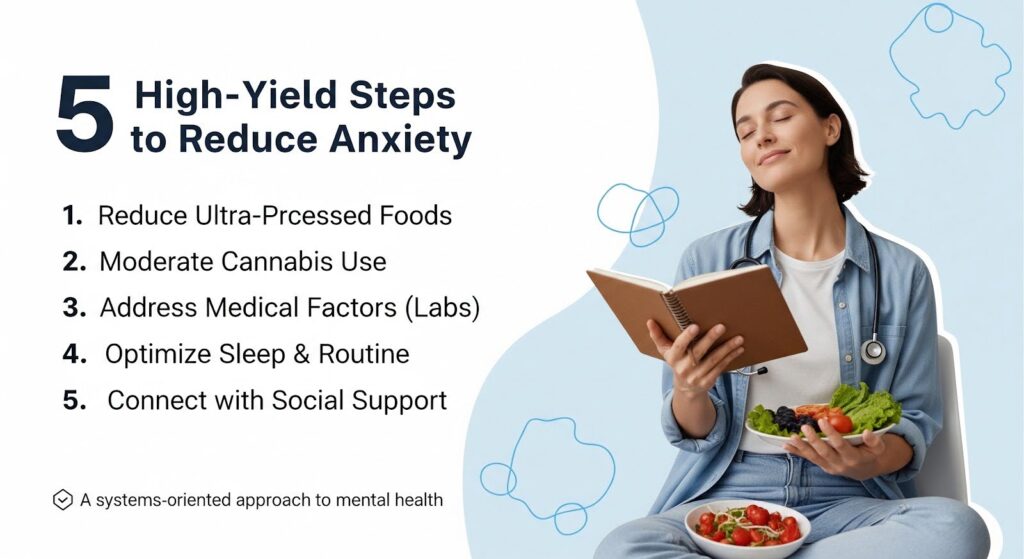
4. Improve sleep and daily routines, potentially using structured programs like cognitive behavioral therapy for insomnia.
5. Screen for economic and social stressors and connect with case management, financial counseling, or community support when available.
These strategies interact, improvements in diet and sleep can modulate microbiome, inflammation, and affective circuits, suggesting a systems-oriented approach to anxiety management.
Why Does It Matter?
Understanding what causes anxiety empowers you to move from feeling helpless to taking concrete steps. While genes and brain circuits set baseline vulnerability, chronic stress, diet quality, substance use, and medical conditions are modifiable.
Addressing these factors doesn’t replace core treatments like therapy or medication, but it can reduce symptom severity, improve treatment response, and prevent relapse.
If anxiety is affecting your daily life, you don’t have to navigate it alone. Comprehensive, individualized care that addresses both mental health and lifestyle factors can make a meaningful difference.
Reach out for support to explore evidence-based treatment options tailored to your needs.

