
If ADHD medication improves your focus but you still struggle to start tasks, manage time, stay organized, or follow through, cognitive behavioral therapy may help. CBT for ADHD teaches practical systems and thinking skills that turn better attention into daily action, often through calendars, task lists, timers, and smaller task steps. This article explains how treatment works, what the exercises target, and what research says about results.
How CBT for ADHD Works
Cognitive behavioral therapy for ADHD is a structured form of therapy built around daily problems. It connects your thoughts, emotions, surroundings, and actions. Then it helps you change patterns that make those problems harder to manage. This approach does not assume that disorganization or procrastination comes from laziness. ADHD can affect time management, planning, task completion, and organization across work, home, and relationships. The adult ADHD overview from the American Psychiatric Association also stresses the role of real life impairment, not symptoms alone.
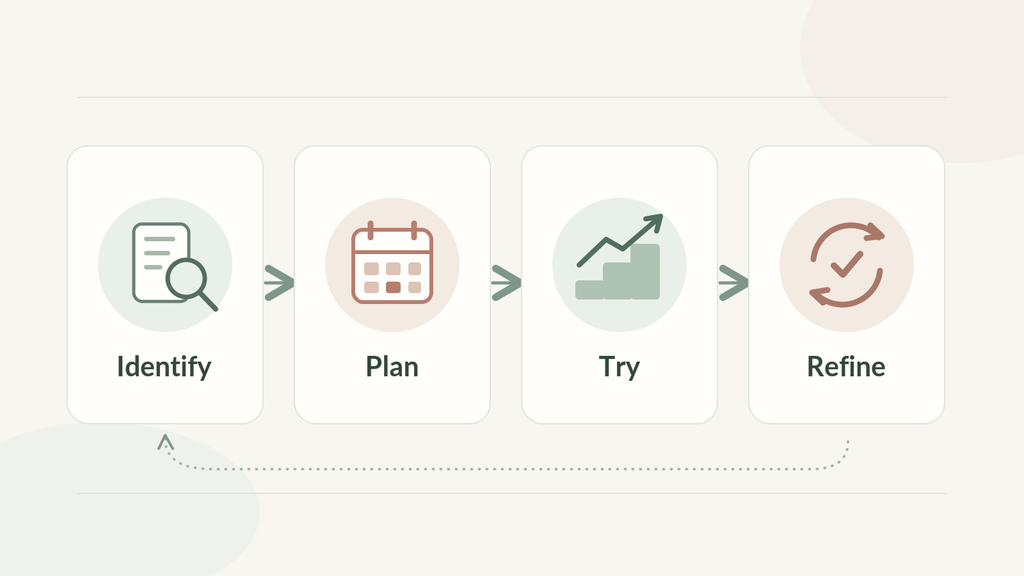
Therapy usually focuses on one clear problem at a time. You might examine why a work report remains untouched even when you have enough time to complete it. The therapist may help you define the first physical action, choose a starting time, remove distractions, and test the plan between sessions. You then review what happened. If the plan failed, that failure becomes useful information. Maybe the first step was still too vague. Maybe you depended on memory instead of setting a cue. Perhaps perfectionism made an early draft feel risky. The goal is to adjust the system, not shame you for struggling with it.
How It Differs From General CBT
General CBT often focuses heavily on beliefs, emotions, and unhelpful thought patterns. ADHD adapted treatment includes that work, but it places more weight on behavior and external structure. Sessions tend to follow a clear format. You review the previous week, examine your use of a skill, practice a new strategy, and agree on a small exercise to try before the next meeting. Repetition matters because understanding a strategy once does not mean you will remember to use it during a busy day.
A well studied protocol includes modules for organization and planning, distractibility, adaptive thinking, and procrastination. The original treatment protocol used calendars, task lists, filing systems, timers, cues, and task chunking to make important actions easier to start and repeat.
What Therapy Can and Cannot Do
CBT can teach ways to manage executive function difficulties. It can help you create routines, prepare for distractions, question beliefs that feed avoidance, and recover when a system breaks down. It cannot guarantee constant focus or remove ADHD. It also cannot correct a medication dose that is ineffective, wears off too early, or causes serious side effects. Sleep disorders, anxiety, depression, substance use, and other health concerns may also affect attention and follow through. That is why effective care starts with a clear picture of the problem. A therapist and prescriber may need to look at symptoms, daily functioning, medication timing, sleep, mood, and life demands separately.
Skills Targeted in Treatment
The cbt adhd skills taught in therapy are compensatory skills. They reduce how much you must hold in your head and make desired actions easier to perform. Treatment usually builds a small set of repeatable systems rather than asking you to overhaul your life at once.
The main skills often include:
- Task initiation: Defining the first visible action, setting a start cue, and beginning before motivation arrives.
- Time estimation: Predicting task length, recording the actual time, and using that information for future plans.
- Planning and prioritization: Choosing what matters now, placing tasks into realistic time blocks, and breaking large projects into steps.
- Organization: Using one trusted calendar, one task capture method, simple filing routines, and regular reviews.
- Distractibility management: Reducing interruptions, changing the work setting, recording distracting thoughts, and returning to the chosen task.
- Emotional regulation: Noticing triggers, slowing impulsive reactions, questioning harsh thoughts, and choosing a response that supports your goals.
Starting Tasks
Task initiation is the ability to begin an intended action within a reasonable time. It is different from staying focused after you begin. You may be able to concentrate on a report once it is open but spend two hours avoiding the document. The assignment may feel too large, uncertain, boring, or emotionally loaded. Medication can make focus more available, yet it does not define the first step for you. CBT makes the starting point concrete. Instead of writing “finish report” on a task list, you might schedule “open the report and write three section headings at 9:00.” That action is clear enough to perform without solving the whole project first. Therapy may also examine thoughts that keep you stuck. “I need to know exactly what I want to say” can become “I can write a rough version and improve it later.” The revised thought is useful because it supports action, not because it forces false optimism.
Estimating and Managing Time
People with ADHD may underestimate how long tasks, travel, preparation, and transitions will take. A ten minute estimate may leave out finding materials, packing, parking, or switching away from the previous activity. CBT exercises for ADHD often compare predicted time with actual time. Before starting, you estimate how long a task will take. When you finish, you record the result. Several observations can give you better planning data than instinct alone.
Backward planning is another common method. You begin with a fixed deadline, identify the steps needed before it, and assign each step a date. This turns a distant deadline into actions that exist on today’s calendar. Timers and alarms can make passing time visible. They work best when each alert has a clear meaning. An alarm that says “leave in fifteen minutes” gives you a specific action. A stream of vague reminders may become easy to ignore.
Planning and Organization
A useful organizational system should collect commitments in as few places as possible. If appointments live in several calendars and tasks are scattered among email, paper, and apps, reviewing everything becomes difficult.
Therapy may help you establish one main calendar and one place to capture tasks. Appointments go on the calendar because they happen at a set time. Tasks go on a list and move into the calendar when you decide when to do them. Daily and weekly reviews keep that system current. During a review, you check upcoming commitments, choose priorities, and identify steps that need preparation. The review also gives you a planned time to reset after a difficult week. Simplicity matters. A complicated productivity system may feel exciting at first but demand too much upkeep. A plain system that you check every day is often more useful than an elaborate one you abandon.
Procrastination and Avoidance
Procrastination often creates immediate relief. If a task feels boring, uncertain, or tied to fear of failure, avoiding it reduces discomfort for a moment. That relief rewards the delay, even though the later consequences are worse. CBT helps you map that sequence. You identify the trigger, the thought or emotion, the avoidance behavior, the short relief, and the later cost. Once the pattern is visible, you can test a different response.
For example, you might use a short timed work period to start an imperfect draft. You may also plan a small immediate reward after completing the first step. The aim is to make starting less dependent on urgency, panic, or the hope that motivation will suddenly appear.
Managing Emotions and Setbacks
Years of missed deadlines, criticism, or inconsistent performance can shape how you see yourself. Thoughts such as “I always fail at systems” may lead you to give up after one missed day. CBT treats a lapse as something to study. You ask what interrupted the routine and what would make restarting easier. This recovery skill is important because no planning system works perfectly.
Therapy can also help with frustration, shame, anxiety, and impulsive communication. You may practice pausing before sending a reactive message, naming the emotion, checking your interpretation, and choosing a response that fits the situation. Emotional symptoms deserve careful assessment. They may relate to ADHD, but they can also reflect depression, anxiety, sleep loss, medication effects, or another condition. Therapy should not explain every difficult feeling as a thinking error.
Does CBT for ADHD Work?
Yes, research shows that structured ADHD adapted CBT can improve symptoms and daily functioning, especially for adults who still have difficulties while taking medication. The evidence is strongest for organized treatment programs delivered across roughly twelve to fifteen sessions. In a randomized study of 86 medication treated adults with continuing symptoms, individual CBT performed better than relaxation and educational support. The controlled trial used an active comparison, which helps separate the effects of specific skills training from attention and supportive contact alone.
Another trial included 95 medicated adults. Participants who received fifteen sessions of CBT showed greater reductions in clinician rated and self reported ADHD symptoms than those receiving medication and usual care. These trial results were maintained at the three month follow up. Longer term findings are also encouraging. A one year analysis found advantages for combined CBT and medication in core ADHD symptoms, depression, and psychological quality of life. The reported effect sizes were moderate for symptom and depression outcomes in the follow up study, though results did not show equal improvement in every area.
These findings do not mean everyone will respond in the same way. Trials use trained therapists and defined treatment programs. Results may differ when therapy is less structured, when another condition is driving the symptoms, or when access and attendance make regular practice difficult.
What About CBT Without Medication?
ADHD specific CBT may still be a reasonable choice if you do not take medication, cannot tolerate it, or prefer a nonmedication approach. Some research includes adults who were not receiving active stimulant treatment and suggests that structured therapy can help.
Still, the evidence is stronger for CBT added to medication than for therapy alone in adults who have never used medication. Many major trials studied people who were already taking stable medication. Those studies show the added value of therapy, but they cannot prove that therapy and medication are interchangeable. The practical choice depends on your needs, preferences, health history, and level of impairment. It is reasonable to ask a clinician what outcomes you should expect from therapy alone and how progress will be measured.
Skills Problem or Medication Question?
Persistent difficulty does not automatically mean you need a higher medication dose. It also does not mean every remaining problem should be treated with another planner or timer.
A skills problem is more likely when medication clearly improves attention but you still struggle to choose priorities, define first steps, estimate time, or maintain a routine. You may perform well when someone else supplies structure yet become stuck during open, self directed time. A medication question is more likely when benefit is absent, inconsistent, or predictably ends before your responsibilities do. Irritability, poor sleep, appetite changes, anxiety, or a sharp decline as medication wears off also deserve discussion with a prescriber. Current medication guidance recommends reviewing diagnosis, target symptoms, titration, functioning, and other factors when response is incomplete.
Timing offers useful clues. If you can plan and work during the morning but lose that ability at the same time every afternoon, medication coverage may be part of the problem. If you can focus on interesting tasks during the medication’s effective period but avoid an uncertain project, initiation and avoidance skills may need more attention. Sleep is another key factor. In a large clinic sample of adults with ADHD, about 60 percent screened positive for at least one sleep disorder. The sleep findings included insomnia, delayed sleep patterns, and restless legs symptoms among the common concerns.
Do not change a dose, schedule, or formulation on your own. Instead, record when you take medication, when you notice benefit, when it seems to wear off, what tasks you were doing, how you slept, and any side effects. That record can help your prescriber and therapist identify the more likely cause.

Finding the Right Therapist
A therapist offering ADHD adapted CBT should be able to explain how sessions are organized and which skills the treatment covers. Look for clear goals, regular practice between sessions, review of previous exercises, and progress tracking.Ask whether treatment includes task planning, calendar use, distraction control, procrastination work, adaptive thinking, and relapse planning. The therapist does not need to follow a manual without flexibility, but the work should have more structure than open discussion alone.Supportive therapy can still be helpful, especially when shame, grief, relationships, or another mental health condition needs attention.
Coaching may also help with accountability and routines. Neither service should automatically be presented as the same intervention tested in CBT trials. Progress should include more than a lower symptom score. Symptoms, functioning, and quality of life overlap, but they are not identical. Research on clinical outcomes supports measuring these areas separately.A useful plan might track missed deadlines, late arrivals, completed administrative tasks, use of a calendar, or the number of days you begin a planned task on time. Concrete measures show whether skills are changing your life outside the therapy room.
Why These Skills Matter
The real aim of treatment is not perfect organization. It is making daily life more manageable and reducing the cost of ADHD at work, at home, and in relationships. Medication may improve the conditions needed for focus. CBT helps you decide where that focus goes and creates systems that support action when memory or motivation is unreliable. For many adults, the best plan combines medical review, skills focused therapy, sleep care, and changes to the environment.
You do not have to wait until every symptom is gone to make meaningful progress. A clearer first step, one trusted calendar, a realistic time estimate, or a practiced way to restart after a lapse can reduce stress and improve follow through. If ADHD related struggles are affecting your mental health or daily functioning, explore therapy programs at The Summit Wellness Group that can support your next step.

