
Borderline personality disorder can make emotions swing hard and fast, and finding treatment that matches that intensity is not easy. DBT for BPD works by pairing weekly individual therapy with a skills group, phone coaching, and a therapist consultation team, adding up to about three scheduled hours of care each week for close to a year. This article breaks down what DBT for BPD actually involves, which skills matter most, and what the evidence can and cannot say about whether it works.
What Is DBT for BPD?
Dialectical behavior therapy, or DBT, is a structured treatment built for people with intense emotion swings, chronic suicidal thoughts, and repeated self-harm — patterns closely tied to borderline personality disorder. Psychologist Marsha Linehan developed it, and a large meta-analysis later confirmed it as one of the more established options for this group.
The direct answer is this: DBT for borderline personality disorder works by helping you accept what is real in the moment while also changing the behaviors that keep you unsafe, stuck, or disconnected from the life you want. It does not ask you to simply sit with your pain, and it does not demand that you fix everything overnight. Both things are treated as true at once. Your reactions make sense given what you have lived through, and you still need new tools to build a steadier life.
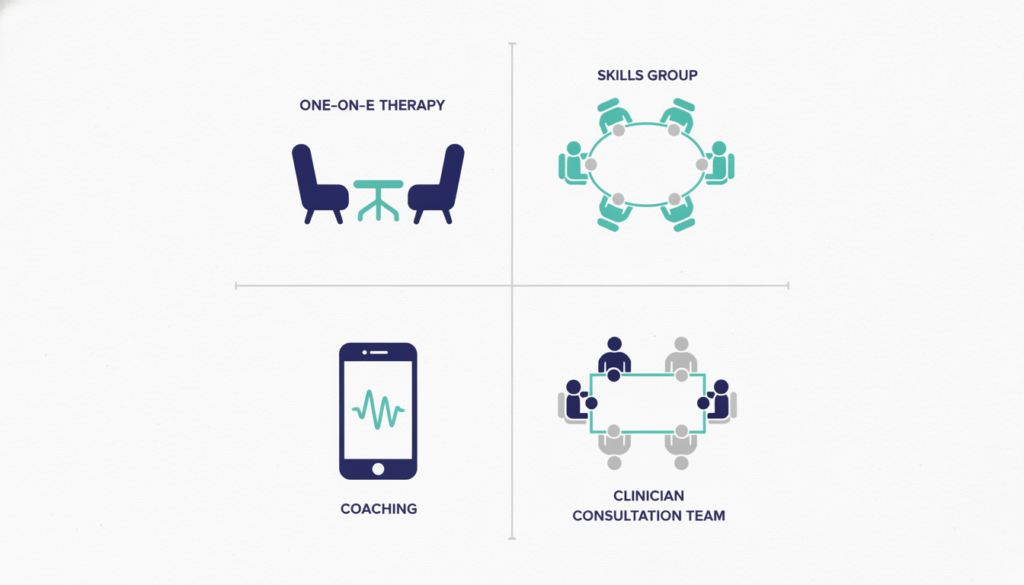
Put simply, DBT for BPD is not one hour of talk therapy a week. Standard outpatient DBT has four coordinated parts working together, and this program component guide makes clear that no single piece is meant to stand in for the others.
Why DBT Is Used for BPD
BPD often involves emotions that spike fast and fall slowly, plus an intense fear of abandonment and a pull toward impulsive or self-destructive behavior. A small cue — a delayed text, a sudden change in plans — may land as rejection. That does not mean the pain is exaggerated. It means the nervous system and learned patterns are reacting with high alarm.
A therapy that leans only toward change can feel harsh, like being told to just calm down. A therapy that leans only toward acceptance can miss patterns that truly need to shift. DBT therapy for borderline personality disorder was built around exactly this tension, holding both truths instead of picking a side.
That is why DBT is structured rather than open-ended. It has a plan for what to do when risk shows up, when therapy starts breaking down, and when everyday life becomes harder to manage.
The Four Parts of DBT for BPD Treatment
Every full DBT program includes four pieces, and each one serves a different purpose. Skip one and the model becomes something else, even if it still uses DBT language.
| DBT mode | What it does | Typical weekly time | Do you attend? |
| Individual therapy | Applies skills to your life, reviews the diary card, and works through the target hierarchy | About 50 to 60 minutes | Yes |
| Skills training group | Teaches mindfulness, distress tolerance, emotion regulation, and interpersonal skills in a class-style format | About 1.5 to 2.5 hours | Yes |
| Phone coaching | Offers brief, real-time help using a skill during a hard moment between sessions | As needed, no fixed hours | As needed |
| Consultation team | Supports the clinicians themselves, keeping treatment steady and reducing burnout | Weekly clinician meeting | No |
Note. These are typical outpatient estimates, not counting homework, diary cards, or coaching contact outside a session.
Add up individual therapy and the skills group alone and you reach roughly three scheduled hours per week, before homework, skills practice, or coaching calls enter the picture. The consultation team is the one part you never see. It still matters, because it helps keep treatment consistent and coordinated when risk and emotions run high.
How DBT BPD Treatment Works
DBT starts with a practical assumption: you are doing the best you can, and you also need to learn new ways to act. Validation helps you feel understood. Change strategies help you build safer behavior. If therapy only validates, nothing may change. If therapy only pushes change, it can feel cold or shaming. DBT tries to hold both at once.
Individual Therapy and Priorities
Full-model DBT does not treat every problem as equally urgent. It follows an order, often called the target hierarchy.
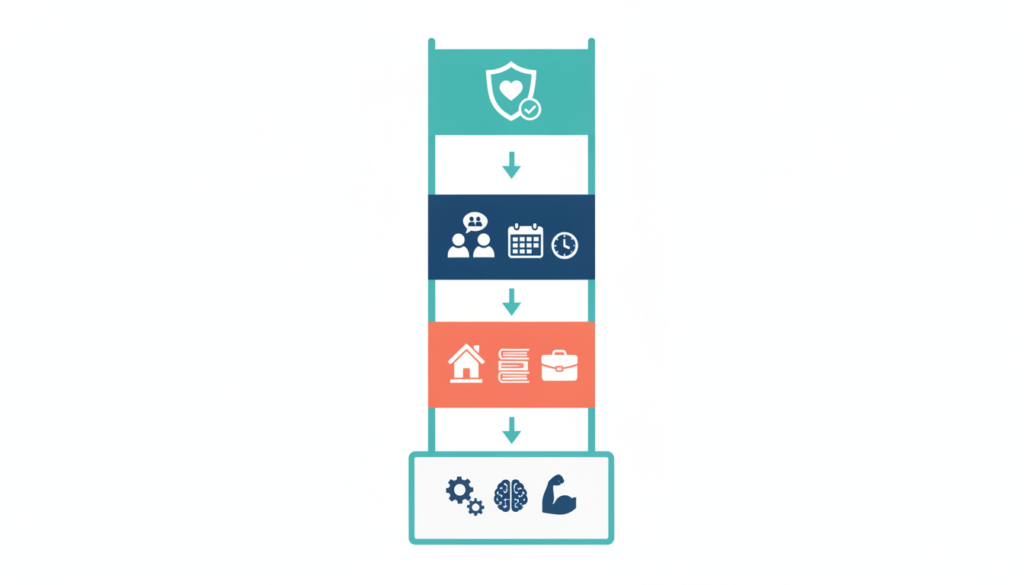
Life-threatening behavior comes first, including suicidal behavior and serious self-injury. Therapy-interfering behavior comes next — repeated missed sessions, not using agreed tools, or therapist actions that get in the way. Quality-of-life problems follow, such as substance misuse, severe relationship chaos, housing trouble, or work problems. Skill building runs through the whole process.
This order matters. If you had a self-harm episode this week, DBT usually starts there before talking about a less urgent argument or work stress. That is not because other issues do not matter. It is because safety and keeping treatment functional come first.
Diary Cards Keep Treatment on Track
A diary card is a short daily log of emotions, urges, target behaviors, and skills used. It sounds small, but it does heavy lifting. Without it, a session can drift toward whatever feels most urgent in the room that day rather than what actually happened during the week.
The therapist reviews the card at the start of the session and uses it to set the agenda. Memory is unreliable during periods of intense dysregulation, which is exactly when accurate information matters most. Diary cards are important enough to the model that clinician certification standards require applicants to submit work samples showing diary cards and targets that follow the Stage 1 hierarchy.
Skills Group and Practice
The skills group is usually more like a class than a process group. You learn new skills, practice them, review homework, and apply them to real situations.
This can feel strange at first. Many people come to therapy wanting to talk through pain, not fill out worksheets or practice a skill with a name. But the point is not paperwork. The point is repetition. Skills need to be practiced before they are available during shame, panic, rage, numbness, or fear of abandonment. A full curriculum cycle commonly runs about 24 weeks, and many adult programs repeat it to create a year-long course.
Phone Coaching and Real Life
Phone coaching is one reason full-model DBT differs from many other therapies. It is meant to help you use a skill in the moment you need it — before self-injury, before sending a risky message, or when you are trying to get through an intense urge without making the situation worse. The goal is not a long therapy session by phone. It is brief coaching that helps you choose and use a skill.
This is also the component most often missing in practice. A 2024 implementation study found that real-world programs offer individual therapy and skills groups far more consistently than phone coaching and consultation teams. That matters because a program may advertise “DBT” while leaving out parts of the full model.
Programs can set reasonable limits on coaching. They should be able to explain when it is available, who responds, what counts as an emergency, and how coaching differs from crisis services.
DBT Skills for BPD
DBT skills for BPD are not magic phrases. They are actions you practice until they become more available under stress. The standard skills curriculum covers four areas.
Mindfulness skills help you notice thoughts, feelings, body sensations, and urges without acting on them right away. For someone with BPD, this can create a small but important pause between an emotion and a behavior.
Distress tolerance skills help you get through a crisis without making it worse. These skills are not about pretending the pain is fine. They are about surviving the moment without self-harm, threats, impulsive spending, substance use, or relationship damage.
Emotion regulation skills help you understand what emotions are doing, lower your vulnerability to extreme mood swings, and choose actions that fit your goals. That might include naming emotions, checking the facts, improving sleep routines, reducing avoidable stress, and practicing opposite action when an emotion is pushing you toward something you will regret.
Interpersonal effectiveness skills help with asking, saying no, setting limits, keeping self-respect, and protecting relationships. This is often central in DBT for borderline personality disorder, because relationship pain can trigger intense fear, anger, shame, or urgent attempts to reconnect.
Is DBT Effective for BPD?
The careful answer is yes: DBT has a strong evidence base for BPD, especially when chronic suicidal behavior or self-injury is part of the picture. But the evidence is strongest for structured DBT programs, not for every service that uses the DBT label.
A 2015 component randomized trial studied 99 high-suicide-risk women with BPD across one year of treatment, comparing standard DBT with versions that separated skills training from individual therapy. That study is useful because it shows DBT is made of parts that can be studied separately. It does not mean a single part can be sold as the whole treatment.
The research also supports a cautious view of treatment length. Full-model outpatient DBT for adults with BPD is commonly delivered over about 12 months, with a 24-week skills curriculum often repeated. Whether six months works as well as twelve was considered important enough to warrant a dedicated randomized trial, but that question has not been settled. Shorter programs are sometimes marketed as equivalent to a full year. That claim is not currently supported for chronic self-harm and BPD.
Improvement also does not usually look like never feeling intense emotion again. More often it looks like shorter crises, fewer harmful actions, faster repair, and more ability to pause before acting. For one person, progress might mean calling for coaching before self-injury instead of after. For another, it might mean waiting before sending a message, or returning to therapy after a missed session instead of quitting.
DBT for BPD Versus DBT-Informed Care
“DBT-informed” usually means a provider uses some DBT ideas or skills without offering the full model — individual therapy with DBT worksheets, a stand-alone skills class, or a general therapist who teaches distress tolerance from time to time. Professional guidance on implementing DBT in practice treats the use of only selected modes as DBT-informed treatment rather than standard DBT.
Those services can still be useful. The problem starts when they are presented as the same thing as full-model DBT. That distinction matters most when risk is high. If someone has repeated self-injury, suicidal behavior, or major treatment drop-off, a weekly coping skills group may not be enough support.
If you are looking for dialectical behavior therapy for borderline personality disorder, ask direct questions:
- Does the program include weekly individual DBT therapy?
- Is there a structured skills group, and how long is one full curriculum cycle?
- Is between-session coaching available for skill use, and what are its limits?
- Does the therapist attend a weekly DBT consultation team?
- Are diary cards used and reviewed in session?
- How are suicidal behavior, self-injury, missed sessions, and quality-of-life problems prioritized?
Clear answers matter more than branding. A good provider should be able to say plainly what they do and do not offer.
Certification and Quality Signals
Training matters too. DBT is not just a set of coping tips. Therapists need to understand the target hierarchy, chain analysis, validation, coaching, diary cards, and consultation team work.
Independent certification standards review more than a certificate of attendance. They typically require DBT-specific education hours, a written exam, consultation team participation, and review of recorded Stage 1 sessions with the associated diary cards. That is a meaningfully different bar than a weekend workshop. Certification is not the only sign of good care, and its absence does not prove poor care, but if a provider says they are certified, it is fair to ask which organization certified them and what the process required.
Making an Informed Choice
BPD can make life feel like a series of emotional emergencies. DBT matters because it gives you and your treatment team a shared plan for what to do when the wave hits. The larger goal is not just fewer symptoms. It is building a life that feels worth staying for — safer relationships, fewer crisis-driven choices, more stable routines, and a stronger sense that emotions can be survived.
If you are comparing options, look past the label. Ask what the program actually includes, how it handles risk, and whether the level of care matches your needs. Full-model DBT is intensive and not always easy to find, but knowing what it is helps you make a more informed choice.
If you want support for emotion dysregulation, self-harm urges, substance use, or co-occurring concerns, The Summit Wellness Group can help you explore outpatient mental health care.

