
Searching for a therapist can feel overwhelming when every directory looks the same and no one seems to be taking new patients. The fastest way to find a good therapist is to verify insurance and openings together, since one 2025 report found only 18.5% of psychiatrists were accepting new patients. This guide explains how to find a good therapist, where to start, and what to ask before booking.
How to Find a Good Therapist: Start Here
A therapist’s name showing up in your insurance directory does not mean you can actually get an appointment with them. Directories often list clinicians who have retired, changed offices, stopped taking new clients, or never really joined that specific plan network in the first place. Even government guidance warns that provider directories are not always accurate, and it recommends calling the plan directly to confirm a clinician’s status before you show up for care.
The real first step in finding a good therapist is to treat any list of names as a lead, not a guarantee. Call your insurer and ask about the exact plan you have, since one company can run several different networks with different clinicians in each. Then call the therapist’s office and confirm they are still taking new clients under that same plan, at the location you would actually visit. Doing both at once, rather than one after the other, saves weeks of dead end calls and gets you to a real appointment faster.
Where to Start When Finding a Therapist
Finding a therapist starts with knowing what kind of care you need and how you plan to pay for it. If you have insurance, open your member portal and search using your exact plan name, not just the company’s brand name on your card. Ask what your cost will be for a first visit and a follow up session, and whether anything requires approval first.
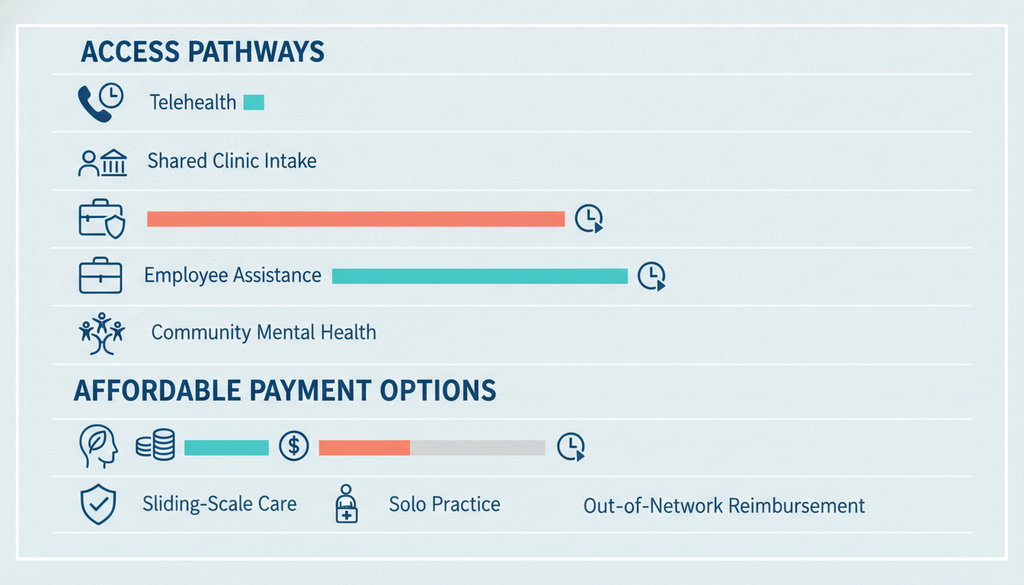
Once you have a short list of five to ten options, contact more than one type of provider at the same time. Call a couple of solo therapists, a larger clinic with a shared intake line, and check whether your job offers an employee assistance program. This matters because supply is tight in many areas right now. A 2025 review of psychiatry wait times found a median wait of 67 days for a new in person psychiatry appointment, and just over half of the psychiatrists contacted had no openings at all. Therapy appointments are not tracked in exactly the same way, but the lesson still applies: do not wait on one lead when you can pursue several paths at once.
What to Ask Before You Book a Session
Before your first appointment, a short phone call can save you a surprise bill later. Ask your insurer whether the specific clinician, not just their practice, is contracted with your exact plan, and ask what you will owe for an initial visit versus a routine follow up. Guidance on how to verify insurance coverage recommends having your member ID, the therapist’s full name, and their practice address ready before you call, since coverage can vary by clinician and location even within one office or one group practice.
It also helps to ask your plan how quickly you should expect to be seen. Some plans publish real numbers you can hold them to. One insurer’s California member materials, under its timely access rules, list urgent behavioral health care within 48 hours and routine psychiatry visits within 15 business days. If every provider your plan lists cannot meet a similar standard, you have grounds to ask for help finding someone who can, including a request to have your plan cover an outside provider at your usual copay.
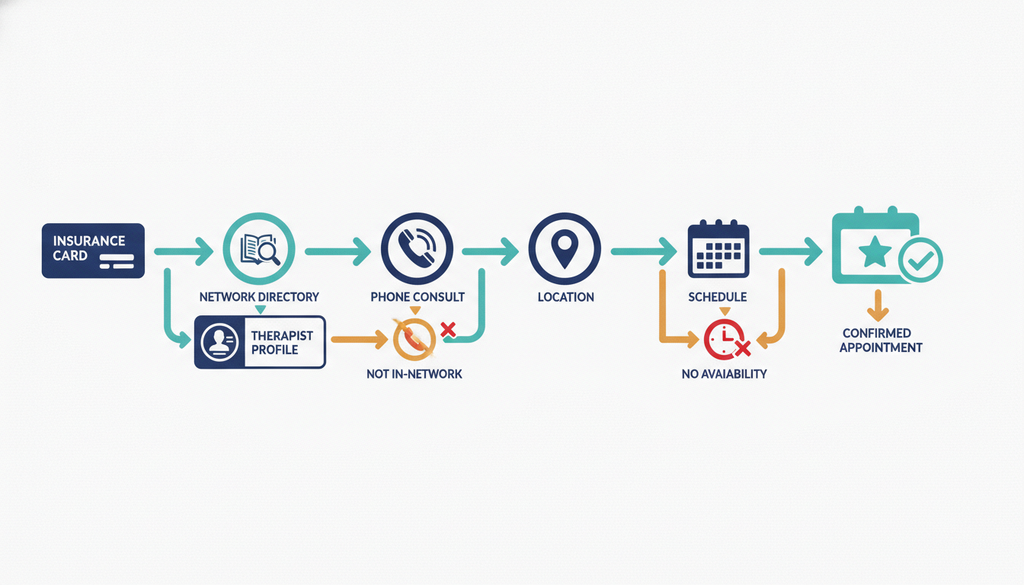
When you reach the therapist’s office directly, ask who will actually see you, whether they are taking new patients right now, and what the earliest opening looks like for both your first visit and your second one. A receptionist confirming your name is in a system is not the same as confirming you have a real, usable appointment.
How to Choose a Therapist Who Fits You
Knowing how to choose a therapist starts with paying attention to fit, not just credentials on a wall. Researchers describe the working relationship between a client and a therapist as having three parts: whether you agree on what you are trying to change, whether you agree on how you will get there, and whether you feel enough trust and respect to actually do the work together. This idea, often called the therapeutic alliance, is one of the more consistent predictors of outcome across decades of therapeutic alliance research, even though a good relationship alone does not guarantee results.
You can test for this fit directly, and you should. Ask a prospective therapist what they think might be driving your main concern, why they are suggesting a particular approach for it, and how you will both know if the plan is working. A therapist who can answer clearly, without brushing off your questions, is already showing you the kind of collaboration that research links to better outcomes. If someone seems annoyed at being asked to explain their thinking, that reaction is worth paying attention to as well.
Finding a Therapist Near Me Fast
If your search is really about how to find a therapist near me right now, expanding beyond your immediate neighborhood usually helps more than waiting for one local opening. Searching only for someone within driving distance can slow you down, since telehealth, larger clinics, and workplace programs are often able to see you sooner.
The table below compares common starting points so you can decide where to put your first few phone calls.
| Starting point | Typical speed | Best for |
| Telehealth or plan virtual care | Often fastest for routine needs | Non emergency therapy or medication visits |
| Large clinic with shared intake | Faster than calling many solo offices | Getting seen by the first qualified clinician |
| Employee assistance program | Often quick for short term support | Employed clients wanting immediate help |
| Community mental health center | Varies, but crisis triage is usually fast | Limited income, no insurance, or higher acuity needs |
Some platforms built for this purpose advertise fast turnaround. One online therapy option reports that many users get an appointment within two days and lets you filter by state, insurance, and specialty, though you should still confirm your own plan is accepted before you book anything. Community centers and workplace programs can move just as fast for some people, especially when cost or a shortage of local specialists is the real barrier rather than a total lack of providers.
How to Find a Good Therapist on a Budget
Cost stops many people before they even start looking. If a therapist is not in your network, ask directly what they charge and whether they offer a sliding scale based on income. Community clinics, university training programs, and workplace assistance programs often cost far less than paying full price for a private practice session. One 2026 cost overview cites typical rates of about 100 to 250 dollars per session for a licensed therapist paying out of pocket, and 200 to 400 dollars for a psychiatrist, with community clinics sometimes charging based on income instead of a flat fee.
If you decide to see someone outside your network anyway, ask for a written estimate before your first visit and find out whether your plan will reimburse any part of the cost through a claim you submit yourself. A little homework here prevents an unpleasant bill weeks later, once the sessions have already happened and the numbers are harder to question.
What to Expect in Your First Few Sessions
You do not need to feel completely better after three or four sessions, but you should be able to describe what you are working on and roughly why. A large analysis following more than five thousand clients found that early improvements in the client and therapist relationship predicted symptom relief later on, and symptom relief also strengthened the relationship in turn, suggesting the two build on each other rather than one simply causing the other. This early alliance research is a good reason not to dismiss a nagging sense that something feels off in the first few weeks of care.
Many therapists also track progress with short questionnaires about mood, anxiety, or how a given session felt to you. Professional groups call this ongoing review process measurement based care, and note it should actually shape decisions in your sessions rather than sit unused in a file somewhere. If your therapist collects this information but never brings it up in conversation, it is fair to ask what the plan is for using it going forward.
When to Consider Switching Therapists
A few signs suggest it might be time to look elsewhere. You still cannot explain your own goals after several sessions. You feel dismissed or judged when you raise a concern about pace or approach. Your symptoms are getting worse and the plan never seems to change to address that. None of these automatically mean therapy has failed, but each one is worth raising directly with your therapist before you decide to leave.
If you do switch, you keep more than you might think. Ask your outgoing therapist for a short summary of your goals, what has helped so far, and any current safety concerns, along with copies of your relevant records. That summary, paired with your own notes on what worked and what did not, gives your next therapist a real starting point instead of a blank page and a repeat of the same early questions.
Why the Right Fit Matters
Finding the right therapist is not about landing a perfect match on the first try. It is about building a process where your goals stay clear, your progress actually gets checked, and you feel safe enough to say when something is not working. Put that structure in place, and the ordinary ups and downs of treatment become far easier to manage.
If you are ready to stop searching alone and want guidance matched to your needs, check out outpatient programs at The Summit Wellness Group built around exactly this kind of collaborative care.

