
Do you already know your anxious thoughts are exaggerated but still can’t shake the fear? Acceptance and commitment therapy for anxiety, or ACT, tackles that exact gap by teaching you to make room for anxious feelings while still doing what matters, and a landmark randomized trial found ACT produced anxiety improvements similar to traditional CBT for mixed anxiety disorders. This guide walks through the techniques, exercises, and evidence so you can decide if ACT for anxiety fits your situation.
What Is ACT for Anxiety? A Simple Overview
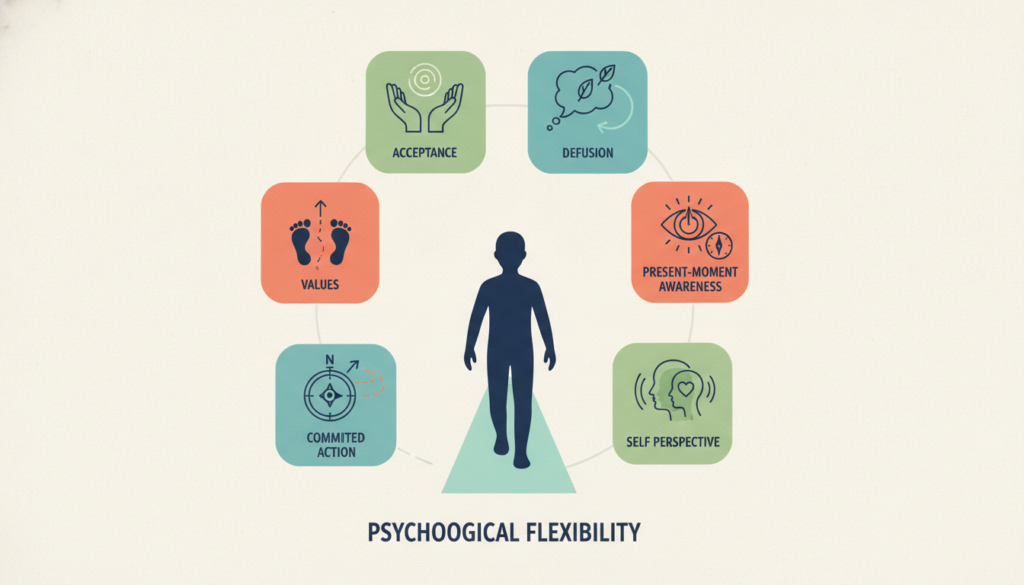
Acceptance and commitment therapy anxiety treatment does not try to erase fear before you can act. It aims at something called psychological flexibility, which just means noticing thoughts, feelings, and body sensations while still choosing actions that fit your values.
ACT organizes that goal around six connected skills, often described together as the six core processes. They include acceptance, cognitive defusion, present moment awareness, self as context, values, and committed action. None of them require you to feel calm first.
Put simply, ACT therapy for anxiety asks a different question than most people expect. Instead of “how do I make this fear go away,” it asks “can I carry this fear and still live the life I want.”
How ACT Explains Why Anxiety Sticks Around
Knowing a fear is irrational rarely turns it off. A theoretical comparison of ACT and CBT explains why. Insight and emotional learning are separate systems, so a racing heart or an intrusive thought can keep firing even after your brain agrees the danger is small.
ACT calls the habit of trying to control, escape, or get rid of that discomfort experiential avoidance. It shows up as leaving a store the moment panic starts, rehearsing a sentence for the tenth time before a meeting, or checking a lock until it feels right. Each of these habits brings quick relief, which is exactly why they are hard to stop. Over time they can shrink your world instead of shrinking your anxiety.
ACT also points to cognitive fusion, when a thought like “I will embarrass myself” gets treated as fact instead of a passing mental event. Loosening that grip, rather than debating whether the thought is true, is often where act techniques for anxiety begin.
Core ACT Techniques for Anxiety
ACT groups its main tools into a short set of skills you can practice in almost any anxious moment.
Acceptance and Willingness
This means making room for a feeling instead of fighting it. It is not the same as liking the feeling or giving up on your safety. It simply means you stop spending all your energy trying to force the sensation away.
Cognitive Defusion
Defusion helps you notice a thought as a thought rather than obey it. Saying “I’m having the thought that I’ll fail” creates a small gap between you and the thought, enough room to still choose what you do next.
Present Moment Awareness
Anxiety often lives in imagined futures. Present moment awareness pulls attention back to what is actually happening now, your breath, the room, the conversation, rather than the worst case story your mind is telling.
Values and Committed Action
Once you know what actually matters to you, whether that is connection, honesty, or growth, you can take one small step toward it, even while anxious. This is often the piece that turns insight into real change.
ACT Exercises for Anxiety You Can Practice Today
These act exercises for anxiety are meant to be short and repeatable rather than one long session.
- Name the story: silently label the anxious thought, such as “here’s the failure story,” to create distance from it.
- Anchor in the body: notice five things you can see, hear, or feel to pull your attention into the present moment.
- Willingness pause: before leaving a feared situation, take three slow breaths and ask if you can carry the feeling one more minute.
- Values check in: write one sentence about why this moment matters, then take the smallest next step toward it.
- Leaves on a stream: picture each anxious thought landing on a leaf and drifting past without chasing it downstream.
None of these exercises are meant to replace action. They are meant to support it, so you can walk into the meeting, the flight, or the hard conversation with the fear present rather than waiting for it to leave first.
Does ACT for Anxiety Actually Work? What Studies Show
In short, yes. Several randomized trials show ACT produces anxiety relief similar to CBT, though CBT still has the larger and longer research history behind it.
A 2021 meta analysis pooling 23 randomized trials and more than 1800 adults with diagnosed anxiety disorders found that ACT’s short term anxiety outcomes were comparable to CBT, while a related mindfulness based approach showed smaller effects. In a separate 2012 trial of adults with mixed anxiety disorders, ACT and CBT improved similarly by the end of treatment. Among people who completed care, ACT participants showed lower clinical severity at the 12 month mark, though CBT participants reported better quality of life at that same point.
A social anxiety trial comparing ACT, CBT, and a waitlist found that both active treatments beat waitlist, with no clear winner between ACT and CBT on symptoms, clinician ratings, or a public speaking task.
So does act work for anxiety in a way that clearly beats CBT? Not based on current evidence. The honest answer is that acceptance and commitment therapy anxiety treatment is a solid, evidence backed option rather than a proven upgrade over CBT for every diagnosis. The right pick often depends less on the label and more on what is actually keeping your anxiety in place.
ACT vs CBT: Which Fits Your Anxiety Better
The two approaches overlap more than people assume. Both often use exposure, meaning both ask you to approach the thing you fear rather than avoid it. The difference is mostly in framing. CBT tends to ask whether a feared prediction is accurate and then tests it directly. ACT tends to ask whether the struggle against a feeling is workable and whether you can act despite it.
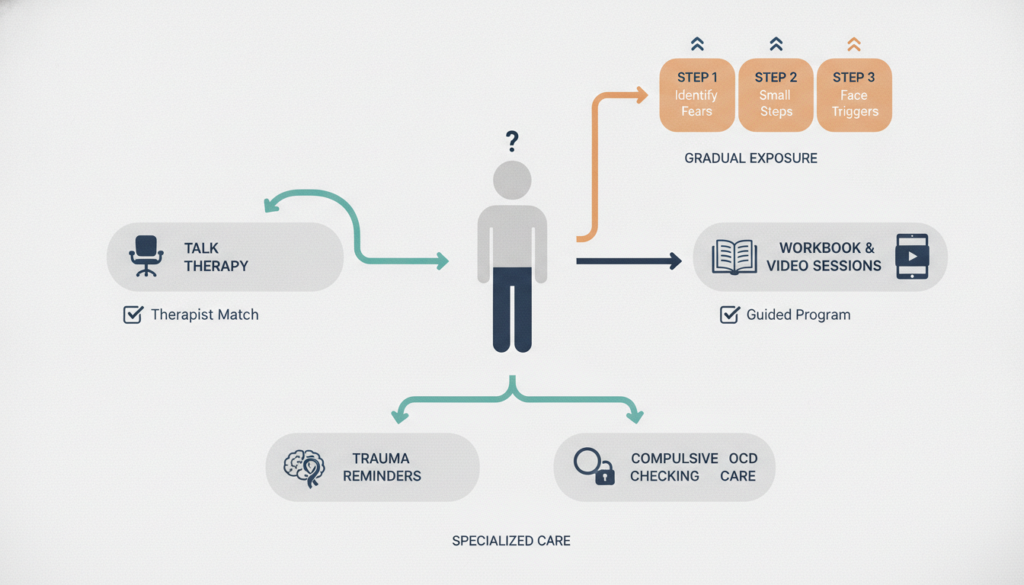
Some conditions call for a specific first choice regardless of this debate. For obsessive compulsive disorder, exposure and response prevention is considered the first line psychological treatment according to the ERP treatment guide from the International OCD Foundation, with ACT sometimes added to support willingness during exposure. For post traumatic stress disorder, VA guidance recommends trauma focused psychotherapy over other approaches as the most effective option.
For generalized anxiety, panic, and social anxiety without those specific patterns, either ACT or a skilled CBT clinician is a reasonable starting point. What tends to matter more is whether the treatment actually gets you approaching feared situations rather than talking about them indefinitely.
When ACT Therapy for Anxiety Is the Right Fit
ACT tends to fit well when you already understand your fear is exaggerated but still feel stuck, when you are worn out from arguing with your own thoughts, or when anxiety has quietly narrowed your work, friendships, or daily routine. It also fits people who want to keep living fully even while some anxiety remains, rather than waiting for it to disappear first.
Digital and workbook versions of ACT can help too. A 2022 review of internet delivered ACT across 22 trials and more than 2400 participants found a small but real drop in anxiety. Most of those programs, though, included some guidance from a coach or therapist rather than running fully on their own.
That distinction matters if your anxiety includes compulsions, panic that limits your movement, trauma reminders, or thoughts of self harm. A workbook alone cannot assess risk, and it cannot always catch when a helpful exercise has quietly turned into another form of avoidance, like repeating a defusion phrase until the fear feels gone rather than simply more bearable.
Why the Right Approach Matters
Anxiety that responds to structured skills, whether from ACT, CBT, or both together, tends to loosen its grip on daily choices. People who practice willingness and defusion often start showing up for the meeting, the flight, or the hard conversation again, even with some fear still present.
That shift, more participation in a full life rather than a full absence of fear, is usually the more meaningful marker of progress than a lower score on a worry questionnaire alone. Getting there often takes more than good intentions. It takes a plan, some practice, and often someone trained to help you tell the difference between healthy acceptance and quiet avoidance.
If anxiety keeps running the show despite your best efforts, you do not have to sort it out alone. Find out more about our outpatient programs at The Summit Wellness Group and get support that fits where you are right now.

