
If you’re feeling nervous about your first therapy session, that’s a completely normal reaction. Most first sessions are actually an intake assessment that runs about 60 to 90 minutes, where your therapist asks about your history, symptoms, and goals rather than jumping straight into treatment. This guide covers what happens in the first therapy session, what questions to expect, and how to prepare so you can walk in feeling ready.
What Happens in the First Therapy Session
Many people picture their first appointment as immediately unpacking their whole life story on a couch. In reality, most first sessions work more like a structured conversation than a deep therapy session. The goal is for the therapist to understand your situation well enough to build a plan, not to solve everything in one meeting.
Before You Even Meet: The Screening Call
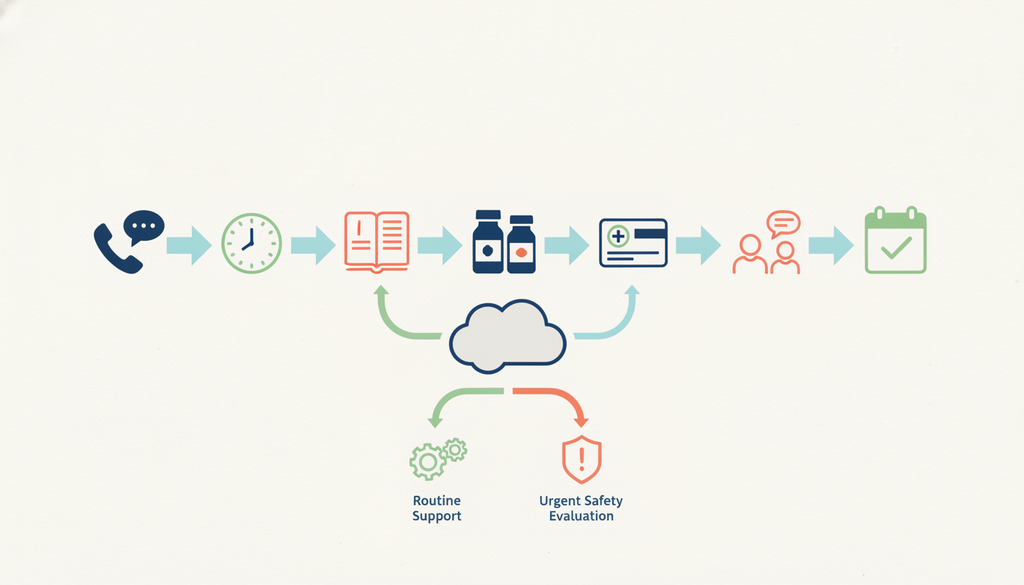
Some practices schedule a short phone or online screening before you ever see your therapist in person. During that call, staff usually collect your insurance details, ask what is bringing you in, and confirm that the service being offered actually matches what you need. If anything raises a safety concern during this step, a clinician may decide you need an urgent evaluation rather than a routine appointment. This screening is triage, not a judgment about how serious your situation has to be before you deserve help.
Inside the Appointment Itself
Once you sit down, the intake assessment commonly runs longer than a typical follow up visit, often 60 to 90 minutes. That extra time exists because your therapist is gathering background they will rely on for weeks or months to come, not because something is wrong.
How the Conversation Is Structured
The pace usually starts broad and narrows as things go on. A therapist might open with something simple, like what brought you in or how long you have been dealing with this, before moving toward more specific questions about symptoms and history. This structure gives you room to settle in before anything sensitive comes up. By the end, a good therapist should be able to summarize what they heard, offer at least a tentative sense of direction, and tell you what the next session will likely focus on.
What to Expect in Therapy: Topics You’ll Cover
Most first therapy session questions fall into a handful of categories, and knowing them ahead of time can take some of the mystery out of the room.
Your History and Current Symptoms
Expect to talk about when your symptoms started, what seems to trigger or worsen them, and how they affect your sleep, work, relationships, and daily routine. Your therapist will likely ask about past treatment, any hospitalizations, and medical or family history that might be relevant. None of this is a test. It simply shapes what kind of care actually fits your situation.
Safety Screening and Suicidal Thoughts
Safety screening is a standard part of almost every intake, not a sign that something is uniquely wrong with you. A therapist may ask whether you have ever had thoughts of suicide or thoughts of harming yourself. It helps to know these experiences sit on a spectrum rather than being one single thing. One analysis found that about a third of people with a past suicide attempt described passive suicidal thoughts without an active plan or intent, which is exactly why a single yes or no question rarely tells the whole story. Answering honestly, even about passive thoughts from years ago, gives your therapist a clearer picture and does not automatically trigger any outside action.
Medications and Substance Use
You should also expect questions about current and past medications, including anything you tried and stopped, and about alcohol or other substance use. This is not about catching you in something. It is about ruling out medical factors and understanding what has or has not worked before.
How to Prepare for Therapy Before You Go
A little preparation goes a long way toward making the first therapy session feel less overwhelming, and none of it requires a polished script.
What to Bring
Jotting down a few notes before you arrive can make the conversation smoother for both you and your therapist.
- A short symptom summary covering your top two or three concerns and roughly when they started
- A current medication list with doses, prescribers, and anything you stopped taking and why
- Notes on past diagnoses, previous therapists, or hospitalizations, if any apply to you
- A rough sense of how your symptoms are affecting sleep, work, and relationships right now
- One or two goals you would like therapy to help with, even if they feel vague
- Practical items like your insurance card, identification, and any paperwork the practice sent ahead
Practical Logistics
Beyond the content itself, it helps to plan the basics. Confirm the appointment format, whether it is in person or by video, and check parking, transportation, or technology needs the day before. If you are using insurance, it is worth confirming what your plan actually covers for outpatient mental health care so cost does not become a surprise on top of everything else. None of this needs to be perfect. Bullet points on your phone are enough. The point is to avoid trying to recall dates and medication names from memory while also managing first session nerves.
Confidentiality in Your First Therapy Session
Before you answer sensitive questions, a good therapist should walk you through confidentiality in plain language rather than simply handing you a form to sign. This is part of standard informed consent guidance for the profession, and it should happen before you disclose anything about trauma, self harm, or family history.
Ordinary Records vs Psychotherapy Notes
Two categories of records matter here. Your ordinary clinical record, covering things like diagnosis, treatment plan, and progress notes, supports your treatment, your billing, and coordination with other providers. Separately, some therapists keep what the federal definition calls psychotherapy notes, private reflections kept apart from your main file. A specific authorization is generally required before those notes can be shared with anyone, including your own insurer, which gives them extra legal protection beyond the rest of your chart.

What Your Insurer Can and Cannot See
In practice, this usually means your insurer sees billing information such as dates of service and a diagnosis code, but not a transcript of what you actually said in the room. Ask your therapist directly what goes into your ordinary record versus any separate notes, and what would ever be shared outside your care team. A therapist who cannot answer this clearly before your first session is worth asking again, or asking a second time in different words.
After Your First Therapy Session: What’s Next
Setting a Follow Up Plan
By the end of the appointment, you and your therapist should land on a rough plan covering how often you will meet, what the next session will focus on, and what to do if something feels urgent between appointments. It is completely fine to ask directly how you will both know whether the treatment is actually working over time.
If you are also waiting on a separate psychiatry appointment for medication, brace yourself for a longer wait than you might expect. A months long waitlist is commonly reported for psychiatric care, which is one more reason starting therapy while you wait is usually worth doing rather than putting everything on hold.
If the Fit Isn’t Right
It is also completely normal for the first therapist you meet not to feel like the right match. That is not a failure on your part or theirs. Personality, communication style, and approach all matter in therapy, and it simply means it is worth trying another clinician rather than assuming therapy itself will not help.
Why Getting Ready Actually Helps
Walking into your first therapy session with even a rough idea of what to expect changes the experience. You spend less energy managing surprise and more energy actually thinking about your answers. A short symptom summary, a medication list, and a clear sense of your goals will not make the nerves disappear completely, but they give you something solid to hold onto while a stranger asks you personal questions for the first time. That small amount of preparation is often the difference between a first session that feels like an interrogation and one that feels like the start of something useful.
If you are ready to take that first step, reach out to The Summit Wellness Group to talk through your options and get scheduled with a therapist who fits your needs.

