
Wondering how is ADHD treated once you are past childhood and juggling a job, a household, or a relationship? ADHD treatment for adults typically pairs stimulant or nonstimulant medication with therapy and daily skills training, since medication eases core symptoms while therapy builds coping tools medication cannot provide alone. This guide walks through medication options, therapy approaches, and daily skills so you can build a plan that actually works.
What Is ADHD Treatment for Adults?
At its core, ADHD treatment for adults blends three parts: medication that supports attention and impulse control, therapy that builds coping skills, and daily routines that cut down on chaos at home and at work. A doctor or nurse practitioner usually reviews your symptoms, medical history, and any other conditions before recommending a plan, since no two adults respond to the same combination the same way.
There is no single ADHD treatment option that fits everyone. Most adults sample a few different adhd treatment options before settling on a combination that matches their symptoms, job demands, and tolerance for side effects.
Getting ADHD Care Through Telehealth
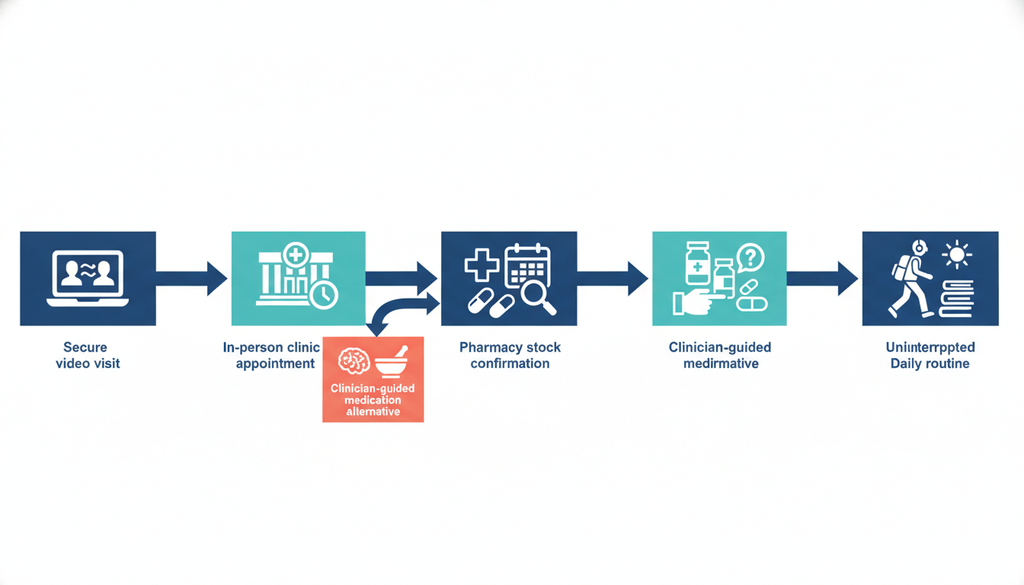
Video visits have made it much easier for adults to get evaluated and start treatment without taking a full day off work. Under the temporary telehealth extension, DEA registered doctors can prescribe stimulant medication through video visits without an in person exam first, as long as they follow state and federal rules through the end of 2026.
That flexibility will not last forever in its current shape. If you rely on telehealth for a stimulant prescription, it helps to build a relationship with a clinician who can also see you in person, so a single rule change does not interrupt months of steady care.
How Is ADHD Treated? Medication Options Explained
Two Main Stimulant Families
Stimulant medication is often the first ADHD treatment a doctor suggests because it tends to work fast and helps many adults concentrate, finish tasks, and slow down impulsive choices. Stimulants generally split into two families, amphetamine based drugs and methylphenidate based drugs, and a detailed medication guide walks through the brand and generic versions inside each group.
Why Extended Release Products Differ
These products are not interchangeable just because they share the same total milligram amount. Extended release versions use different delivery technology to control how fast the medicine enters your system and how long it lasts. A formulation research review found onset and duration can vary widely between drugs, with one option starting in about 1.5 hours and covering roughly 14 hours, compared with close to 2 hours to start and about 16 hours of coverage for another. That is one reason switching brands or formulations should happen with your clinician, not on your own.
Nonstimulant Medication Choices and Mood
FDA Approved Nonstimulant Options
Not every adult can or wants to use a stimulant. Atomoxetine and viloxazine extended release are the two nonstimulant medications approved for adult ADHD in the United States, and a nonstimulant treatment guide notes that both tend to work gradually, often needing several weeks before the full benefit shows up.
What Guanfacine Can and Cannot Promise
Some clinicians also consider guanfacine extended release. An adult guanfacine trial conducted in Japan found the drug improved core ADHD symptoms compared with placebo, though the same study did not measure whether it eased irritability, mood swings, or sensitivity to criticism. If emotional ups and downs are your main concern, it helps to know that stimulants and atomoxetine showed a real but more modest benefit for emotional swings than for attention symptoms, based on an emotional lability review that pooled nine placebo controlled trials.
Emotional Ups and Downs Are Common, Not Diagnostic
Irritability, quick anger, and outsized reactions to criticism show up often in adult ADHD, yet they are not part of the official diagnostic checklist. This does not make them minor. Naming the pattern out loud, with your clinician or your partner, can help you choose adhd treatments that target more than attention alone.
Therapy, Coaching and Daily Skills That Help
Therapy Built for ADHD Brains
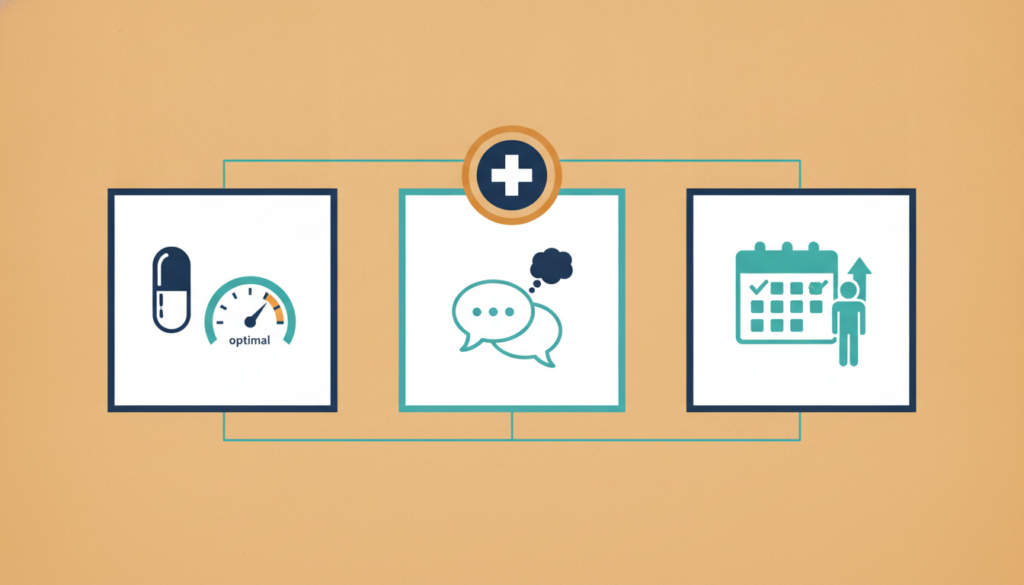
Medication treats symptoms, but skills and support handle the daily friction ADHD creates at work, at home, and in relationships. Talk therapy adapted for ADHD, often called ADHD adapted cognitive behavioral therapy, teaches planning, impulse control, and ways to reframe self critical thoughts after a slip up. An adapted CBT study describing adults who completed this kind of therapy found it blended attention strategies, problem solving, and tools for staying calm during conflict.
Skills and Support Outside Therapy
Structure outside the therapy room matters just as much. Adults managing ADHD often lean on:
- A coach or accountability partner who helps break large tasks into smaller, doable steps
- A steady sleep schedule, since lost sleep tends to worsen both inattention and irritability
- Workplace accommodations such as written instructions, quieter workspaces, or flexible deadlines
- Simple systems like one shared task list, automatic bill pay, and reminders placed where they will actually be seen
- Honest talks with a partner about triggers, plus an agreed plan to pause a heated conversation and return to it later instead of letting it spiral
These habits will not replace medication for most adults, but they build resilience for the weeks when a prescription runs short or a dose needs adjusting.
Working With Your Clinician on Safety and Monitoring
Stimulant treatment works best with regular check ins. Your clinician may track blood pressure, heart rate, sleep, appetite, and mood, and may ask about any other controlled medications you take. Some practices also use a written agreement covering how the medication should be taken, when to call for problems, and how refills work. A risk reduction strategies resource frames these steps as tools that lower harm rather than hurdles meant to slow you down.
If a partner or family member has noticed patterns you have missed, such as how quickly you calm down after an argument or whether bad stretches ever come with days of little sleep and unusual energy, bring that up at your next visit. Those details can help your clinician tell ordinary ADHD frustration apart from something that needs a different kind of care.
Handling Medication Shortages Without Losing Ground
Why Supply Keeps Shifting
Stimulant supply has stayed uneven through 2026. A national shortage report tracked 227 active drug shortages that year and specifically flagged patients who need monthly controlled medication, ADHD stimulants included, as especially likely to feel the effects. Availability can differ by exact strength, manufacturer, and even which pharmacy you happen to use.
Smart Pharmacy Habits
The most useful habit is calling the pharmacy before your prescription gets sent, using a pharmacy planning guide as a script to ask whether they can fill the exact drug, strength, and release form you take. If they cannot, ask about a partial fill or a backup pharmacy before you run out completely.
Whatever happens, do not cut extended release pills without your clinician’s sign off, borrow a family member’s medication, or buy pills from an unregulated source. If your usual prescription is delayed, call your prescriber and pharmacy first, not a stranger online.
Building Your ADHD Treatment Plan
How is ADHD treated well over years rather than weeks? Usually through a combination that keeps getting adjusted as life changes: the right medication at the right dose, therapy or coaching aimed at your specific sticking points, and daily habits that protect sleep and cut down on chaos. Because telehealth prescribing flexibility is set to shift at the end of 2026, it also makes sense to build a relationship with a clinician who can see you in person if needed, rather than waiting for a deadline to force the issue.
Give any new ADHD treatment change, whether that is a medication swap or a new coaching habit, a few weeks before deciding it is not working, and keep your care team updated on what helps and what does not. That steady feedback loop is what turns a list of adhd treatment options into a plan that actually fits your life.
If ADHD symptoms are straining your mood, your relationships, or your daily routine, you do not have to sort it out alone. Reach out to a team that treats the whole picture through the outpatient programs at The Summit Wellness Group.

