
Anticipatory anxiety is the dread that builds before something happens, not while it is happening. Someone might feel their heart pound and their mind spin through worst case scenarios for days before a job interview, long before anything has actually gone wrong. This guide breaks down what causes anticipatory anxiety, the symptoms it produces, and how to stop it from taking over your day.
What Is Anticipatory Anxiety
So what is anticipatory anxiety, in plain terms? It is worry, dread, or physical tension caused by imagining a future event rather than reacting to a danger that is happening right now.
Fear and anxiety are related but different. Fear is a reaction to an immediate threat, like a car swerving toward you. Anxiety reaches forward into a moment that has not arrived yet, and it tends to bring muscle tension and a pull toward avoidance rather than the sharp jolt of fight or flight, as the American Psychiatric Association explains.
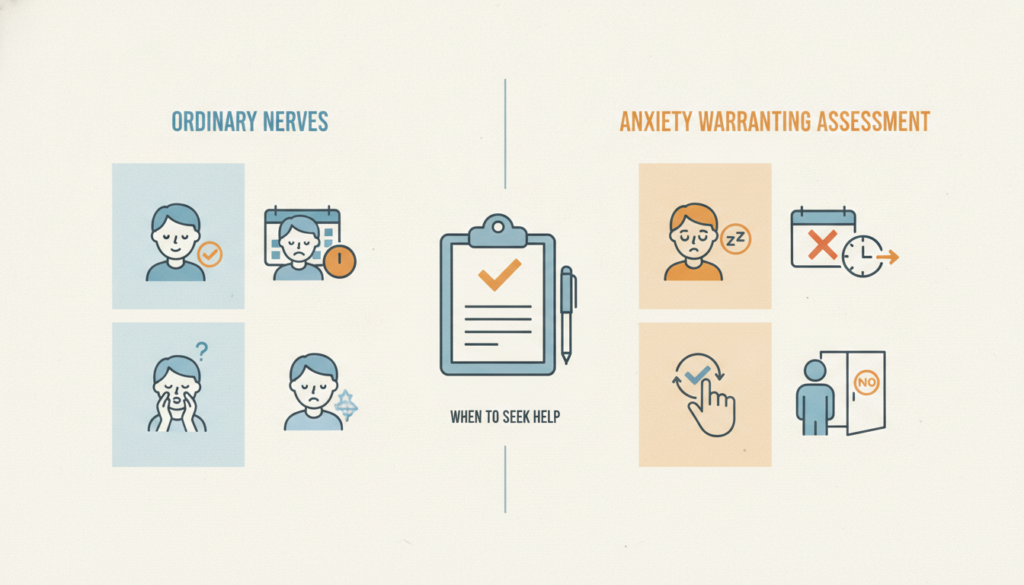
This future focused pattern can show up before ordinary things too, not just major crises. A work presentation, a first date, a flight, or a routine checkup can all trigger it. According to the MSD Manual, anxiety becomes worth addressing when it causes real distress or gets in the way of daily life, not simply because it shows up before something important.
Anticipation anxiety is not automatically a bad sign. A little nervous energy before a big meeting can sharpen focus. The problem starts when the anticipation grows louder than the actual stakes deserve.
What Causes This Kind of Anxiety
There is rarely one single cause. What causes anticipatory anxiety is usually a mix of temperament, past experience, and current stress load working together.
A few common contributors include:
- A tendency to overestimate how likely or how bad a feared outcome will be
- Difficulty tolerating not knowing what will happen, sometimes called intolerance of uncertainty
- Past panic attacks or embarrassing moments that get generalized to new situations
- Sleep loss, which lowers your ability to sit with discomfort
- Habits of repeated checking or asking others for reassurance
- Chronic stress from work, finances, or caregiving
Intolerance of uncertainty deserves special attention because it shows up across so many anxiety patterns. Researchers describe it as an aversive reaction that gets triggered by the sense that key information is missing, and that reaction is sustained by the discomfort of simply not knowing, according to work on uncertainty and exposure. In plain words, some people find not knowing almost as distressing as knowing something bad, which pushes them toward checking, asking, and avoiding rather than waiting things out.
This same discomfort with the unknown has also been tied to eating disorder symptoms, where increasing a person’s ability to tolerate uncertainty during treatment was linked to less dietary restriction and fewer body image concerns at discharge, based on a review of eating disorder treatment. That finding matters because it shows the same mental habit driving fear before a meal, before a flight, or before a medical result.
Anticipatory Anxiety Symptoms and Warning Signs
Anticipatory anxiety symptoms touch the mind, the body, and behavior all at once.
Mentally, people often describe repeated “what if” thinking, catastrophic imagery, and trouble focusing on anything besides the coming event. Physically, common signs include a racing heart, tight chest, upset stomach, sweating, shakiness, headaches, and restless or broken sleep in the nights leading up to the event. The MSD Manual lists many of these gastrointestinal, cardiac, and muscular symptoms as part of the wider anxiety picture, and it is worth remembering that new or severe physical symptoms still deserve a medical check rather than an automatic assumption that anxiety is the cause.
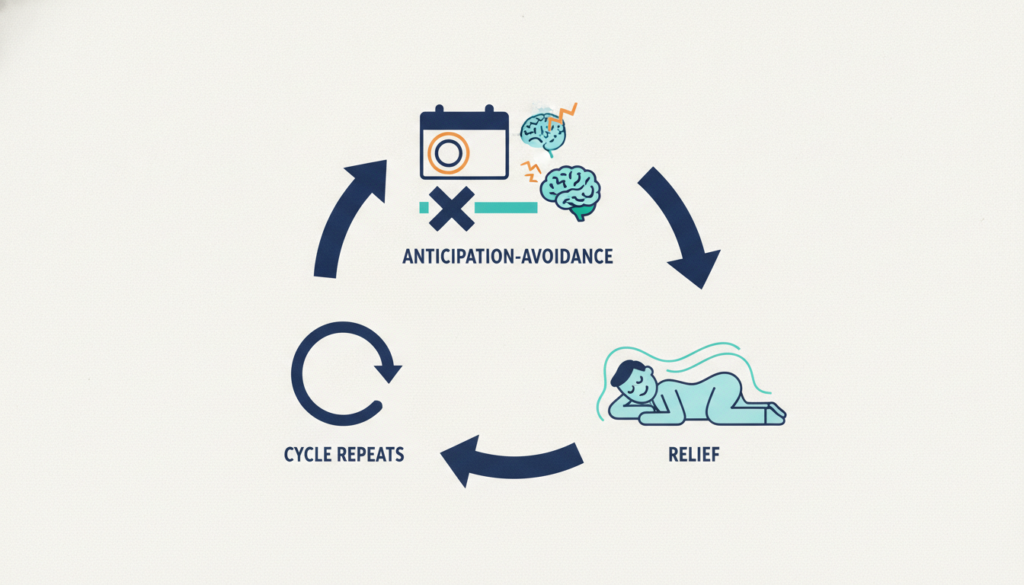
Behaviorally, watch for procrastinating on tasks tied to the feared event, repeatedly asking others for reassurance, over researching, cancelling plans at the last minute, or leaning on alcohol just to get through something. These behaviors usually bring quick relief, which is exactly why they stick around. The relief teaches the brain that avoidance was necessary, even when the feared outcome was unlikely in the first place.
Repetitive worry itself is worth naming separately, because it is not always about a single event. A transdiagnostic look at treatments for repetitive negative thinking found that therapies targeting the habit of prolonged worry, rather than just the content of the worry, tend to help across many different conditions, based on a meta analysis of worry treatments. This suggests the act of dwelling matters as much as what a person is dwelling on.
Anticipatory Stress Examples You Might Know
Concrete anticipatory stress examples make the pattern easier to spot in your own life:
- Losing sleep for a week before a medical test result, checking the patient portal repeatedly
- Rehearsing every sentence of a work presentation until late at night
- Avoiding the highway for days before a long drive because of a feared panic episode
- Asking a partner over and over whether a relationship is fine before a difficult conversation
- Skipping a social event entirely because imagining it feels worse than any past experience justifies
- Refusing food changes before a big event because uncertainty about how your body will react feels unbearable
Notice that none of these examples involve a present danger. Each one is built entirely from imagining a future moment and trying to control or avoid it in advance.
Normal Nerves or a Diagnosable Disorder
A common question is what is anticipatory anxiety disorder, and whether it is something a doctor can actually diagnose. The honest answer is that it is not its own diagnosis in current psychiatric guidelines. It is a process, a pattern of pre event dread, that can appear inside several recognized conditions rather than standing alone as one.
Generalized anxiety disorder involves excessive, hard to control worry across many areas of life, occurring more days than not for at least six months, and it affects roughly 2 to 4 percent of people depending on the population studied, according to the Merck Manual. Panic disorder often produces anticipatory anxiety about the next attack itself. Agoraphobia centers on dread of being trapped or unable to get help, and between 30 and 50 percent of people with agoraphobia also have panic disorder, per the Merck Manual on agoraphobia. Social anxiety, specific phobias, OCD, PTSD, and some eating disorders can all carry the same future focused dread with different content attached.
The practical takeaway is that calling everything “anticipatory anxiety disorder” risks two mistakes at once. It can turn normal nervousness before a big day into something medical, and it can also miss a real underlying condition that needs its own targeted care. If you want a rough sense of severity, a short screening tool like the GAD 7 questionnaire can help you and a clinician talk about how much your worry is interfering with daily function, though it is not a stand alone diagnosis.
How to Stop the Anxiety Spiral
People searching for how to stop anticipatory anxiety are often hoping for a way to make the dread disappear before it starts. A more realistic and more useful goal is learning to act while the dread is still present, rather than waiting to feel calm first.
Here is why that shift matters. Avoidance, reassurance seeking, and constant checking all bring quick relief, and that relief is exactly what keeps the cycle going. The person never gets the chance to learn that the feared event might be manageable, or less likely than it felt, because they escaped before finding out. Reducing reliance on these short term fixes, one small step at a time, tends to work better than trying to eliminate the feeling altogether.
A few grounded steps that support this shift:
- Name the exact prediction you are making, instead of a vague sense of dread
- Test small pieces of that prediction on purpose, like sending an email after one review instead of five
- Delay reassurance seeking by a set amount of time before acting on the urge
- Keep track of what actually happened afterward, compared with what you predicted
- Treat relaxation and breathing as helpful extras, not as a requirement before you are allowed to act
Anticipatory Anxiety Treatment That Works
The strongest anticipatory anxiety treatment approach on record is cognitive behavioral therapy that includes exposure, meaning planned, gradual contact with the feared situation, sensation, or thought instead of avoidance. This method is considered a first line psychological treatment for anxiety, and a five year follow up study found that most people who completed exposure based cognitive behavioral therapy kept their gains over time, according to long term outcome research. That same body of work notes that treatment does not work equally well for everyone and about half of patients may not fully respond, drop out, or relapse, which is a good reason to work with a clinician who can adjust the plan rather than expecting a single fixed formula.
For obsessive compulsive patterns specifically, a method called exposure and response prevention pairs exposure to a feared trigger with intentionally not performing the ritual or checking behavior that usually follows, according to Cleveland Clinic. The logic carries over well to general anticipatory anxiety. Facing the feared event while cutting back on checking, reassurance, or escape is what produces new learning, not just gritting your teeth through discomfort.
Medication can play a supporting role too, particularly for generalized anxiety disorder, where antidepressants are commonly used alongside therapy rather than instead of it. The choice of medication should be made with a prescriber who understands your full history and current symptoms.
Building Long-Term Resilience
Overcoming anticipatory anxiety is less about erasing every uncomfortable feeling and more about changing your relationship with uncertainty itself. You cannot know every outcome in advance, and chasing that kind of certainty is often what fuels the dread in the first place.
A useful mental shift looks like this: instead of asking “will everything be fine,” ask “can I handle this even if it is not perfect.” That question opens the door to actually testing your fears rather than avoiding them forever. Over time, repeated small tests, done in different settings and with different people, tend to generalize better than one big dramatic confrontation with your worst fear.
If your anticipatory anxiety has started shrinking your world, whether that means missed appointments, skipped events, or growing reliance on substances to get through the day, it is worth talking to someone trained in this specific pattern of thinking and behavior. Support that addresses both the anxious mind and any co occurring struggles tends to produce steadier, longer lasting change than coping tips alone.
If dread about the future has started running your life, reach out to Summit Wellness Group’s outpatient treatment programs to talk through what real, personalized support could look like for you.

