
Grief that never seems to ease months after a loss can leave you wondering if what you feel is normal or something more serious. Prolonged grief disorder is diagnosed when intense yearning and related symptoms persist nearly every day for at least a year in adults, per the DSM-5-TR. This guide covers the symptoms, the criteria, and treatments that work, so you can tell hard grief apart from a disorder needing care.
What Is Prolonged Grief Disorder?
Losing someone close to you upends your whole world, and pain that lasts for months is not automatically a sign that something is wrong. Prolonged grief disorder describes something different. It is a grief response that stays intense, persistent, and disabling well past the point most people would expect, based on a person’s culture and circumstances. The American Psychiatric Association recognizes it as a distinct diagnosis in the DSM-5-TR, separate from ordinary bereavement and from major depression.
The distinction matters because grief itself is not something to fix. Fluctuating sadness, yearning, disbelief, and even trouble functioning for a while are common and often expected parts of adapting to a death, especially during the early months of bereavement. Prolonged grief, in contrast, describes a pattern where a person’s attachment to the deceased, their sense of self, and their ability to reengage with life all stay stuck rather than gradually shifting over time.
Prolonged Grief Disorder Symptoms
The signature feature of prolonged grief disorder symptoms is intense yearning or longing for the person who died, or persistent preoccupation with thoughts of them, showing up nearly every day for at least a month. On its own, this does not confirm a disorder. A full diagnosis also requires at least three more symptoms from a set of eight that the DSM-5-TR outlines.
Common associated symptoms include:
- Identity disruption, like feeling part of yourself died too
- Marked disbelief about the death
- Avoiding reminders that the person is gone
- Intense emotional pain such as anger, bitterness, or sorrow
- Trouble reengaging with friends, plans, or interests
- Emotional numbness or a reduced ability to feel much of anything
- A sense that life has no meaning without the person
- Deep loneliness or feeling detached from others, even around people
These symptoms need to show up nearly daily for at least a month, cause real distress or trouble functioning, and go beyond what is expected in the person’s culture or faith before they add up to prolonged grief. Missing someone for years is common and does not by itself mean anything is wrong. What matters is whether grief has broadened into this fuller pattern and is blocking daily life.
DSM-5-TR and ICD-11 Criteria Compared
Prolonged grief disorder criteria differ slightly depending on which system a clinician uses. The DSM-5-TR requires that an adult’s loss happened at least 12 months earlier before a diagnosis can be made. The ICD-11 allows diagnosis after just 6 months, as long as the grief response itself has lasted an unusually long time, clearly exceeds cultural norms, and causes real impairment.
These are not simply two labels for the same thing. A German study of more than a thousand bereaved adults found substantial agreement between the two systems, with a kappa of .75, but some people met one system’s criteria and not the other’s. That gap matters for research, insurance paperwork, and treatment access, so it helps to know which framework a clinician is using.
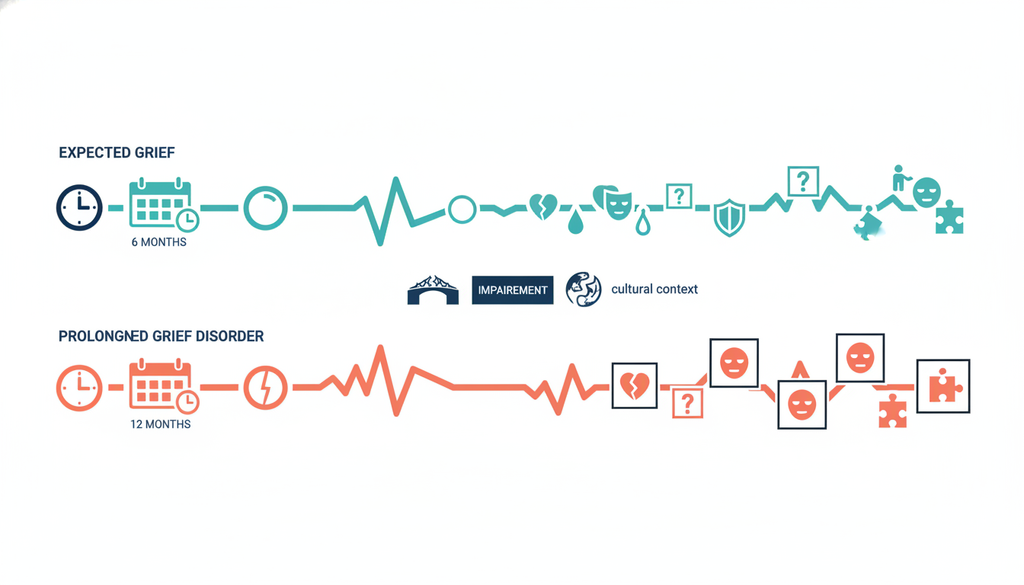
Culture also shapes how prolonged grief shows up and gets read by others. Reviews have found real variation in how grief is expressed and reported across different populations, which is why both diagnostic systems require that symptoms clearly exceed what is expected within a person’s own social and religious context, not just what looks unusual to an outsider.
When Grief Crosses Into Disorder Territory
A common question is simple. How long is too long to grieve? The honest answer is that timing alone never settles it. Even severe grief at eight or nine months after a death can still be a normal, if brutal, part of adapting to loss. What turns grief into a disorder is the combination of persistent daily symptoms, real trouble at work, in relationships, or with self care, and a pattern that clearly departs from what someone’s own culture would expect.
That said, the 12 month DSM-5-TR marker is a diagnostic safeguard, not a reason to delay help. Someone eight months into intense yearning who has stopped working, pulled away from everyone, and can barely get through a day still deserves assessment, support, and treatment for depression, PTSD, or safety concerns right away. The label can wait. The care should not.
Clinicians also need to rule out other explanations. Depression, PTSD, and prolonged grief overlap in some symptoms, like sleep trouble or withdrawal, but prolonged grief centers specifically on separation distress tied to the person who died, rather than a broader low mood or fear response, a distinction outlined in clinical reviews of grief. Getting this right shapes what treatment actually helps.
How Prolonged Grief Disorder Treatment Works
Prolonged grief disorder treatment has one clear front runner: a structured, condition specific psychotherapy known today as Prolonged Grief Disorder Therapy, called Complicated Grief Treatment in older studies. It usually runs about 16 sessions and blends interpersonal, cognitive behavioral, and exposure based techniques aimed at easing avoidance and helping someone rebuild a life that still holds room for memories of the person who died.
The evidence behind it is strong. In a landmark trial comparing this grief specific therapy with interpersonal psychotherapy, 51 percent of participants responded to the grief focused treatment, compared with 28 percent who received interpersonal therapy alone, and they improved faster too. A later four site trial of nearly 400 adults found that 82.5 percent responded to the grief focused therapy paired with a placebo pill, compared with about 55 percent who received a placebo alongside supportive medication visits.
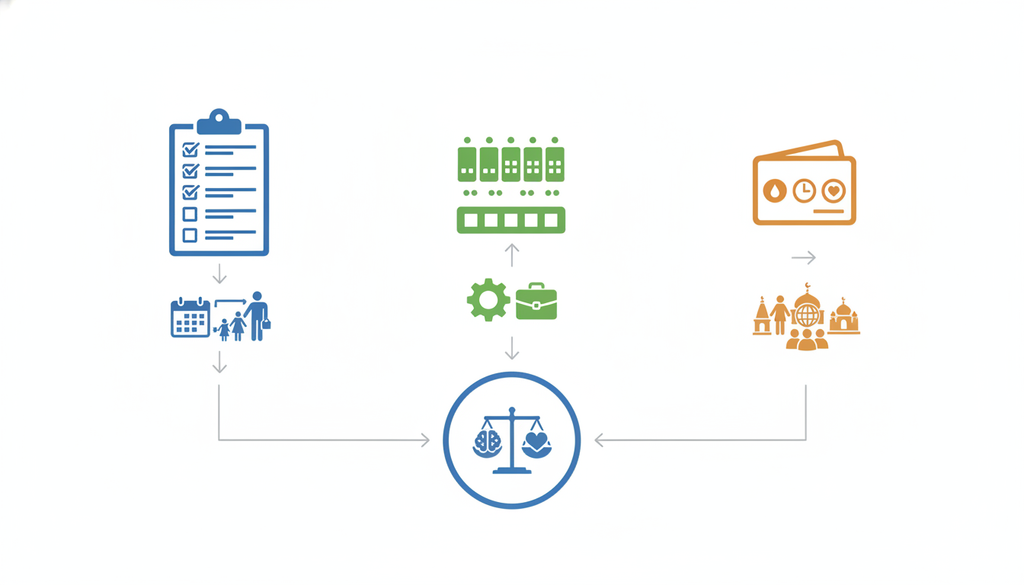
Antidepressants play a smaller, more specific role. Adding the antidepressant citalopram to grief focused therapy barely moved the needle on grief symptoms themselves, but it did help with depression that showed up alongside the grief. In other words, medication can support someone who also has a depressive disorder, but it should not stand in for therapy built to directly target core grief symptoms.
If you are looking for care, ask a potential therapist direct questions. Do they assess for prolonged grief specifically, rather than lumping it in with general sadness? Do they use a structured protocol with around 16 sessions? Do they work on avoidance through gradual, supported exposure to reminders, and help you build toward goals beyond the loss? A clinician who can answer clearly is far more likely to be delivering a treatment matched to what the research actually supports.
Getting Support After a Loss
Prolonged grief is not a character flaw or a failure to move on. It is a recognizable pattern with a name, clear signs, and treatment that has been tested and shown to work. Knowing the difference between hard grief and a disorder that needs care can be the thing that gets someone unstuck after months of feeling frozen in place.
If persistent grief is stealing your ability to work, connect, or feel like yourself, you do not have to sort it out alone. Reach out to a team that can help you find the right outpatient therapy program and start healing at a pace that fits your life.

