
Watching someone you love decline before they die can bring a grief so heavy that mourning feels like it already started, even though they are still here. Anticipatory grief is the term researchers use for this response, and caregiver studies show it often centers on the changing relationship rather than the illness itself. This guide covers the signs, the stages, and the support that helps most before a loss occurs.
What Is Anticipatory Grief?
Anticipatory grief describes the emotional response to a death you know is coming, along with the smaller losses that show up along the way. Researchers also call it pre loss grief or grieving before death. It is not only sadness about a future event. It includes mourning changes that have already happened, like lost conversations, lost roles, and lost plans for the future.
This kind of grief is common among people caring for a spouse, parent, or partner with a terminal illness or dementia. It can include sadness, anger, fear, guilt, and even relief, sometimes all in the same afternoon. Feeling relief that suffering might end does not mean you love someone less. It often reflects exhaustion, fear, and the weight of watching someone struggle. Grief that has no clear right to exist because the person is still alive is sometimes called disenfranchised grief, and it can leave caregivers hiding their pain instead of asking others for help.
Anticipatory grief is not the same as depression or an anxiety disorder, even though the two can look alike from the outside. The difference usually comes down to what the distress is about, whether it fluctuates, and whether moments of connection and relief are still possible.
Anticipatory Grief Symptoms to Watch For
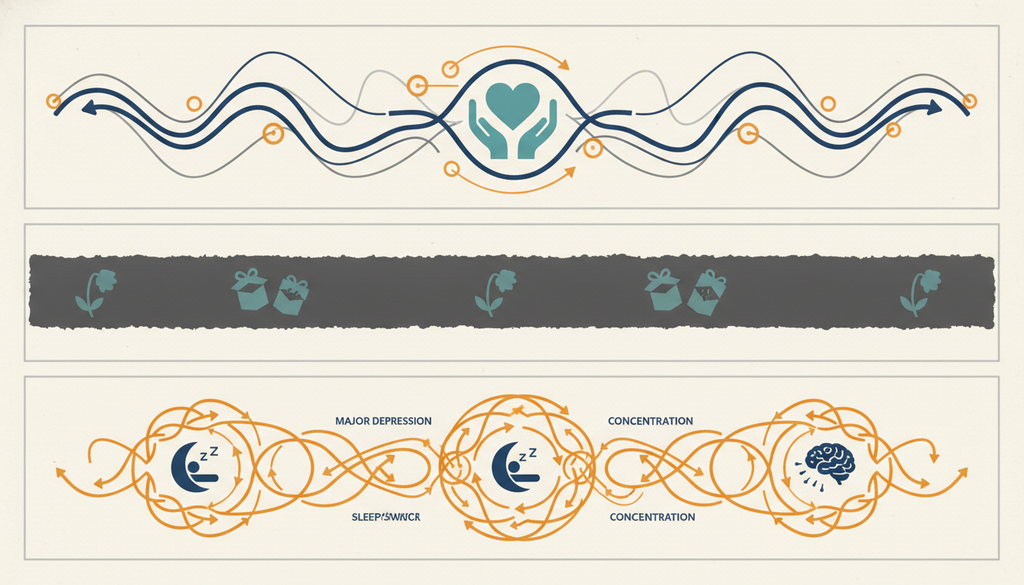
Anticipatory grief symptoms overlap a lot with ordinary caregiving exhaustion, which makes them easy to miss or misread. Common signs include:
- Waves of sadness or crying set off by a decline, a hospital visit, or a moment when the person does not recognize you
- Guilt about wanting a break, feeling relieved, or imagining life after the caregiving ends
- Trouble sleeping or concentrating, along with a constant sense of dread
- Pulling away from friends or activities because grief feels hard to explain to people outside the situation
- Numbness or a sense of running on autopilot through daily tasks
- Moments of connection, humor, or gratitude that still show up between the hard days
That last point matters. In true anticipatory grief, sadness usually comes in waves rather than staying constant, and people can still feel pleasure, love, or relief at times. When distress becomes constant, when nothing brings any relief, or when hopelessness and self blame take over, that pattern points toward something that needs a closer look, such as major depression or generalized anxiety.
Anticipatory Grief Stages
Anticipatory grief does not move through neat, one way steps. Researchers who study caregivers describe it more as a cycle that repeats with each new loss rather than a straight line toward acceptance. One model built from dementia caregiving research, sometimes called the dementia grief model, describes three overlapping states: separation, where you start to notice the person pulling away from who they used to be; liminality, an in between period where the relationship feels neither fully present nor fully gone; and re emergence, where you begin adapting to the changed relationship while still caring for the person.
Moving through these states depends on being able to name the loss, tolerate hard feelings, and adjust to a new reality. Getting stuck in any one of them can raise distress rather than ease it.
New decline can restart the cycle. A hospitalization, a fall, a new symptom, or a diagnosis update can pull a caregiver back into separation even after they felt more settled. This is one reason anticipatory grief in dementia can stretch across years rather than months, since the losses stack up over an uncertain trajectory instead of arriving in one clear moment.
Grieving Before Death: Why It Happens
Grieving before death happens for practical reasons, not because someone loves the person less. Terminal illness and progressive conditions create loss long before the final moment: lost independence, lost conversations, lost plans, lost certainty about what tomorrow will look like. Not knowing what comes next can be one of the heaviest parts. Among family caregivers of people with advanced lung cancer, higher illness uncertainty tracked closely with higher anticipatory grief, which suggests that clear communication about what is likely to happen can ease some of that weight.
Caregiving demands add another layer. Long hours of physical care, disrupted sleep, and constant decision making leave little room to process feelings as they arise. A study of caregivers for older adults with cancer found that caregiver strain was directly tied to higher anticipatory grief, while strong family functioning and resilience softened that link. In short, the exhaustion of caregiving and the sadness of losing someone often feed each other.
Dementia Caregiving and Ambiguous Loss
Dementia creates a particular kind of grieving before death because the person is still physically present while much of who they were slips away. This pattern is called ambiguous loss, and it differs from a clean, single loss because there is no clear ending and no set of mourning rituals to lean on. A spouse might grieve lost conversation on Monday and grieve lost recognition on Friday, all while the person they love sits across the table.
A recent review of caregiving research pulled together findings from thirty studies and found that caregiving stressors and relationship changes were consistently tied to higher anticipatory grief in dementia caregivers, while social support and coping skills tended to lower it. That combination points to something worth remembering: this kind of grief responds to real world support, not just time.
When Grieving Before Death Signals Something More
Anticipatory grief and clinical depression can look similar from a distance, but they are not the same thing, and the difference matters for what kind of help actually works. Grief tends to come in waves tied to the illness and the relationship, and it usually leaves room for connection, humor, or relief at times. Depression tends to be more constant, drains pleasure from almost everything, and often carries a sense of worthlessness that goes beyond the caregiving situation.
Screening tools can help spot symptom severity, but they cannot make a diagnosis on their own, so a positive score should lead to a conversation with a clinician rather than a label. According to screening guidance from the U.S. Preventive Services Task Force, positive results need follow up assessment before anyone draws conclusions about diagnosis or treatment.
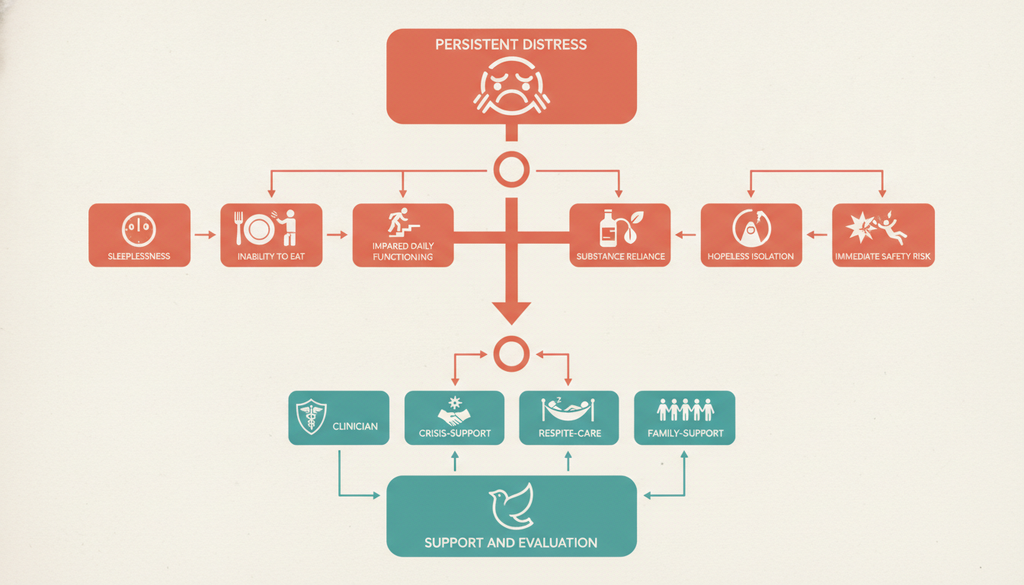
Some signs should prompt evaluation right away rather than waiting. These include thoughts of suicide or wanting to disappear, a sense that everyone would be better off without you, an inability to sleep, eat, or function for days at a time, or relying on alcohol or other substances to get through the day. Research on caregivers has found that severe anticipatory grief can carry real suicide risk, so questions about safety should never be skipped out of politeness or discomfort. If you or someone you are supporting has these thoughts, please reach out for help right away rather than waiting for things to pass on their own.
Grieving before death also does not guarantee an easier grief afterward. Research following caregivers over time has found that people with intense grief before a death often continue to struggle after it too, so support should not stop once someone dies. The American Psychiatric Association notes that persistent, disabling grief lasting well beyond the expected timeframe may point to prolonged grief disorder, a recognized condition that benefits from targeted treatment rather than time alone.
Support That Actually Helps
Support for anticipatory grief works best when it addresses both the heart and the schedule. On the emotional side, that might mean naming the grief out loud, talking with a counselor familiar with caregiving, joining a support group, or simply telling someone that missing a person who is still alive is not strange or disloyal. Rituals matter too. Looking at old photos, playing familiar music, or writing down memories can help you stay connected to who the person was even as they change.
On the practical side, burden reduction is not a side issue, it is part of the treatment. Respite care, help with meals or transportation, and clearer conversations with medical teams about what to expect can lower the load that keeps grief locked in place. Research on caregivers of people with dementia with Lewy bodies found that caregiver burden was one of the strongest predictors of pre loss grief, stronger even than the care recipient’s disease stage. That finding suggests that lightening the practical load can ease emotional weight too, even when the illness itself cannot be changed.
It also helps to watch for depression and anxiety alongside grief rather than assuming one explains the other, since caregiving strain can raise the risk of both.
Why This Matters
Understanding anticipatory grief changes how caregivers treat themselves and how the people around them respond. Naming the grief for what it is, rather than mistaking it for weakness or disloyalty, can open the door to real support instead of silence and shame. Watching for the signs that point toward depression, anxiety, or safety risk can catch problems early, before exhaustion turns into a crisis. And because grieving before death does not erase grief after death, caregivers deserve support on both sides of that line, not just after the funeral.
If you are living through this, you do not have to sort out what is grief and what is something more on your own. Reaching out for depression treatment support can help you find footing again while you keep showing up for the person you love.

