
Self-harm recovery does not always move in a straight line. You might go weeks or months without hurting yourself and then feel an urge return during a difficult period. That can be frightening, but it does not mean the progress you made has disappeared. Recovery involves finding safer ways to manage distress, getting support, and building a life in which self-harm is no longer your primary coping response.
This guide explains what recovering from self-harm can look like, why setbacks happen, and what to do when you need more support. Most studies of relapse and treatment follow adolescents in clinical care, so their findings cannot predict what will happen for every adult or every person who self-harms.
What Does Self-Harm Recovery Really Mean?
Self-harm is a broad term for intentionally injuring or poisoning yourself, regardless of the apparent purpose. Non-suicidal self-injury (NSSI) refers specifically to intentional injury without an intention to die. The distinction matters, but it is not always simple: suicidal thoughts can coexist with NSSI, and intent may change. That is why clinical guidance recommends taking every episode seriously and assessing both physical and emotional safety.
Recovery is more than an uninterrupted streak of days. It may involve understanding what self-harm has been doing for you, asking for help sooner, responding to urges without acting on them, and feeling more connected to other people. Not self-harming is an important goal, but well-being, safety, and a sense of control also matter.
Self-Harm Recovery Stages: A Flexible Framework
There are no universally accepted clinical “self-harm recovery stages.” The following four phases are a practical way to describe common experiences—not a test you must pass, a fixed timeline, or a sequence everyone follows.
| Possible phase | What it may look like |
|---|---|
| Recognizing the pattern | Noticing when urges arise, what they seem to accomplish, and when support is needed. |
| Finding support and building safety | Talking with a professional or trusted person and making a workable safety plan. |
| Practicing different coping skills | Learning to manage distress, including during periods when urges continue. |
| Maintaining progress and reconnecting with life | Continuing care as needed and putting relationships, goals, and daily life ahead of self-harm. |
Recognizing what is happening
At first, you may be trying to understand strong emotions, numbness, self-criticism, or situations that lead to urges. You do not have to identify a single cause before seeking help. A therapist can help you explore patterns without blame.
Building safety and learning alternatives
Progress can mean reaching out before an urge becomes overwhelming, making your surroundings safer, and finding ways to tolerate intense emotions. Evidence is strongest for structured treatment rather than any single coping trick. A 2026 systematic review of randomized trials found that dialectical behavior therapy for adolescents (DBT-A) reduced the proportion engaging in self-harm by about 12 percentage points at the end of treatment compared with control care. This finding concerns adolescents, not a guaranteed result for individuals of any age.
Experiencing steadier periods
Some people stop self-harming for long stretches while still having occasional urges. In a 2024 study of 173 adolescents with elevated suicide risk, 24.1% to 41.1% experienced relapse or recurrence across the specific follow-up intervals studied. Those rates describe a high-risk treatment sample, not the chance that any particular person will relapse.
Living beyond self-harm
Life after self-harm does not require life to become free of stress. It may mean having safer responses to emotional pain, stronger relationships, and less shame about asking for help. Recovery can continue even when it no longer occupies your thoughts every day.
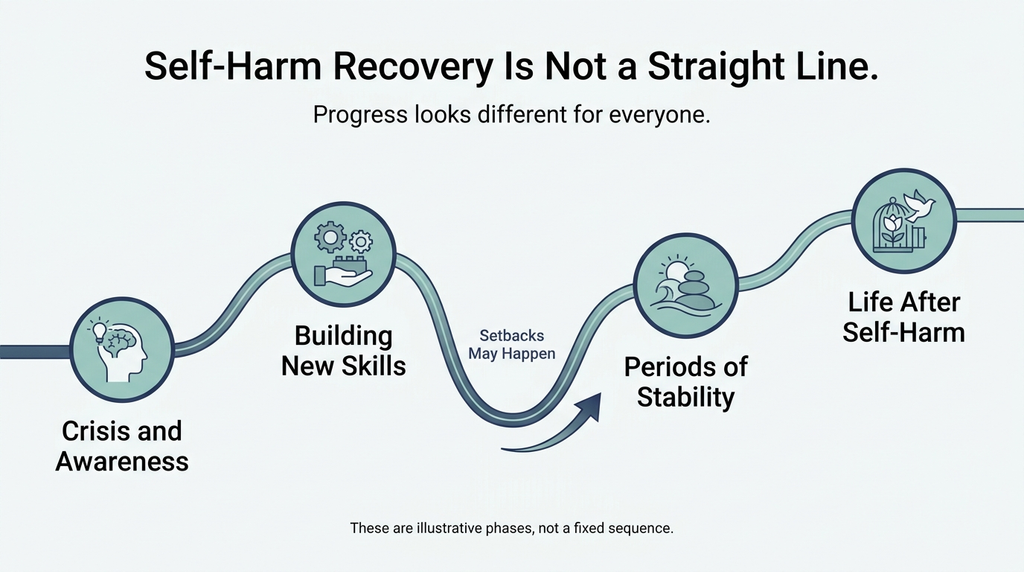
Why Do Self-Harm Urges or Setbacks Happen?
An urge may return during conflict, grief, isolation, sleep loss, trauma reminders, or a gap in treatment. Sometimes the trigger is not obvious. If self-harm once brought short-term relief from overwhelming feelings, the urge to use that familiar response may reappear under pressure.
The way people respond afterward can affect whether they seek care. Shame, harsh criticism, and fear of judgment may make someone less willing to talk. Qualitative research on adolescents and caregivers suggests that calm, supportive disclosure responses can help keep a pathway to care open, although the study does not prove that any one family response prevents future episodes.
A setback deserves attention, not punishment or minimization. It can be a reason to ask what changed, whether safety has changed, and what additional support would help now.
What Helps When an Urge Returns?
If you notice an urge building, focus first on making the next period safer rather than trying to solve everything at once. Options to discuss and practice with your care team include:
- Notice the early signs. Name the emotion, thought, or situation that tends to appear before an urge. Recognizing a pattern can create time to choose another response.
- Change your surroundings. Move to a place where you feel less isolated and ask someone you trust to stay nearby when that would help.
- Use a practiced grounding or coping skill. Try slow breathing, noticing things around you, a familiar calming activity, or another strategy you and your therapist have found helpful.
- Ask directly for connection. A simple message such as “I am having a hard time and could use some company” can be easier than explaining everything at once.
- Reduce access to things you might use to hurt yourself. Plan these steps collaboratively with a clinician or trusted supporter, especially when urges feel strong.
No one strategy works for everyone, and a coping technique is not a substitute for clinical care when you cannot stay safe. Dialectical behavior therapy (DBT) is one treatment approach that teaches distress tolerance, emotion regulation, mindfulness, and interpersonal skills as part of a larger therapy program.
What to Do After a Self-Harm Setback
- Attend to immediate safety and injuries. Get medical assessment or treatment for any injury, poisoning, or suspected overdose. Tell a healthcare professional if you have suicidal thoughts or are uncertain about your intent. If there is immediate danger, use emergency services rather than waiting for a routine appointment.
- Contact your clinician or another trusted professional. You do not need to conceal the episode or wait until your next scheduled visit. Explain what happened and whether urges or suicidal thoughts have changed.
- Review your safety plan together. A collaborative safety plan identifies personal warning signs, coping strategies, supportive people, professional contacts, and steps to reduce access to dangerous items. After a setback, revise the parts that were difficult to use.
- Look at the lead-up without assigning blame. Which feelings, situations, or needs were present? What did you try, and what help was missing? This information can guide a more realistic plan.
- Reconnect with support. A trusted friend, family member, therapist, or support service may help reduce isolation. Someone close to you can listen calmly, help with practical safety steps, and support access to treatment without taking over your decisions.
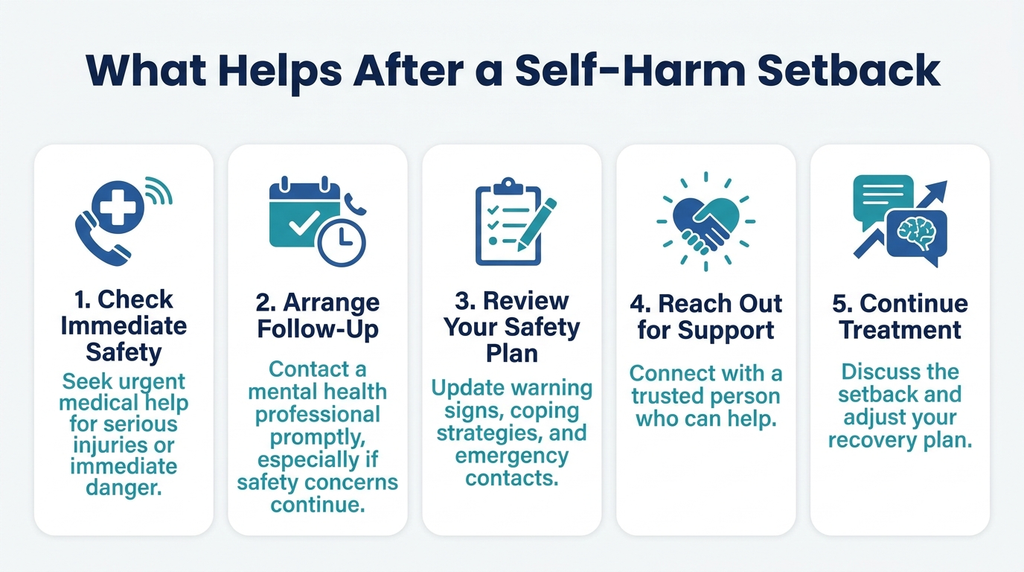
The NICE self-harm guideline recommends initial aftercare within 48 hours of psychosocial assessment when ongoing safety concerns exist. This is a recommendation for healthcare services, not a universal promise about when every person will be seen. Seek urgent help sooner if you cannot remain safe.
How Long Does Recovering From Self-Harm Take?
There is no single recovery timeline. Some people notice change early in treatment; others need longer or additional support. Researchers also define “recovery” differently: a period without self-injury, fewer episodes, better management of urges, or broader improvements in functioning are not interchangeable measures.
A more useful way to assess progress is to ask whether you are safer, more able to recognize urges, more willing to seek support, and better equipped to respond when distress returns. An episode after a period of stability needs assessment, but it does not erase the skills or connections developed during that time.
When Is More Support Needed?
Consider contacting a mental health professional promptly if urges are increasing, episodes are becoming more frequent or medically serious, you are withdrawing from treatment, or your current safety plan no longer works. More frequent therapy, specialist care, or a structured outpatient program may be appropriate depending on your clinical needs.
Seek an urgent assessment if suicidal thoughts intensify, you are unsure you can remain safe, or self-harm is escalating. If you have current intent to act on a suicide plan, an overdose, severe injury, or another immediate emergency, call 911 in the United States or go to the nearest emergency department.
For emotional distress or suicidal thoughts in the U.S., you can call or text 988 at any time, including when you are not sure what kind of help you need. The service is free and confidential. Outside the United States, use your local crisis service or emergency number.
The Bottom Line on Self-Harm Recovery
Recovering from self-harm is not a contest to maintain a perfect streak. It is an ongoing process of strengthening safety, coping skills, and connection. A setback may show that your plan needs adjustment; it does not mean you have to rebuild everything from the beginning.
If you are looking for non-emergency support in the Atlanta area, Summit Mental Health offers information about DBT-based treatment and intensive outpatient care. A qualified mental health professional can help determine what level of care fits your needs. If you are in immediate danger, seek emergency help first.

