
Grief does not look the same for everyone, and not matching what others expect can feel confusing or even alarming. There are several distinct types of grief, including prolonged grief disorder, which clinicians can diagnose in adults once intense longing and disruption last at least 12 months after a death. This guide breaks down all eight types of grief so you can recognize your own experience and know when to seek help.
What Are the Different Types of Grief?
Grief is not one single feeling. It shifts depending on who or what you lost, how the loss happened, and whether the people around you treat it as real. Most grief eases gradually as a person learns to live with the loss. Some grief gets stuck, tangles with depression or trauma, or never receives outside recognition at all, which changes both how it feels and what kind of support actually helps. Researchers and clinicians now describe several distinct types of grief that sort out what someone is actually dealing with, rather than treating every hard loss the same way.
The 8 Types of Grief and Their Signs
Each of these eight types of grief carries its own pattern of thoughts, feelings, and daily struggle. Knowing which one fits your situation can point you toward the right kind of help instead of a generic suggestion to give it time.
1. Normal Grief
Also called acute grief, this is the expected reaction to losing someone close. It can include shock, disbelief, yearning, anger, guilt, trouble sleeping, and short term withdrawal from daily routines. The intensity usually softens over weeks and months as a person begins to accept the loss and slowly returns to work, relationships, and small pleasures. Severe pain early on does not mean something is wrong with you. It means the loss mattered.
2. Prolonged Grief Disorder
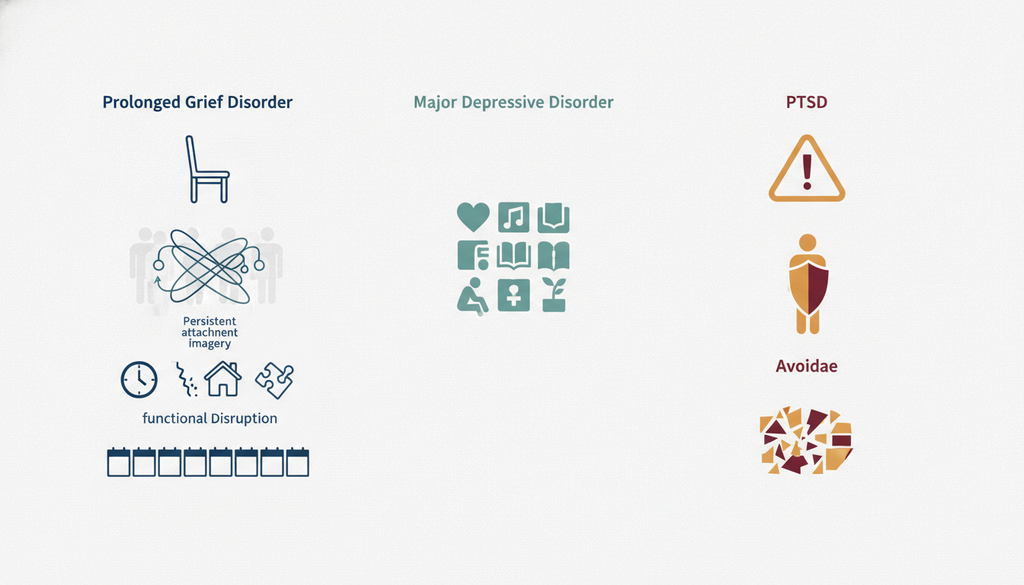
This is the diagnosable form of grief. It shows up as daily longing for the person or constant preoccupation with them that does not soften with time, plus at least three added symptoms such as identity disruption, disbelief, or feeling that life has no meaning without them. Formal clinical guidelines require the death to have occurred at least 12 months earlier in adults before this diagnosis applies, since the first year often includes anniversaries and reminders that naturally stir up pain.
3. Grief Complicated by Depression
Sometimes grief pulls a person into a broader depressive episode. Instead of pain centered on the person who died, sadness and hopelessness spread across every part of life. Guilt turns global, such as “I ruin everything,” rather than specific to the death. Research on grief measures found only a modest link between prolonged grief and major depression, with a correlation of about .25 in validation research, which supports treating the two as related but separate problems.
4. Grief Complicated by Trauma
After a sudden, violent, or witnessed death, grief can tangle with PTSD. The difference lies in the content of the distress. A clinical review notes that fear tends to dominate PTSD, while longing and sadness dominate grief. If someone avoids a location because it sparks panic and a sense of danger rather than because it proves the person is gone, trauma may be driving the reaction more than grief.
5. Ambiguous Grief
This type of grief has no clear ending. It shows up with estrangement, dementia, addiction, or disappearance, where someone is physically present but emotionally unreachable, or gone without a resolution. Mourning becomes harder to start because there is no funeral, no death, and often no agreement among family about whether a loss even occurred. Grief for an estranged parent can resurface at holidays, during illness, or when reconciliation quietly stops feeling possible.
6. Disenfranchised Grief
Disenfranchised grief happens when a loss is real to you but not recognized by the people around you. A disenfranchised grief overview describes this as grief tied to a relationship, a loss, or a way of grieving that others will not validate. The person may hide their pain, apologize for being upset, or hear comments like “you’ll get over it” that shut down any chance of support.
7. Grief After Pregnancy Loss
Miscarriage, stillbirth, infertility, and failed fertility treatment often become disenfranchised in a very specific way. A trauma stress center resource describes this loss as commonly trivialized and stripped of ritual, especially when the pregnancy was early or not widely known. Comments such as “you can try again” treat a future possibility as a replacement for what actually happened, which leaves the grief unspoken.
8. Grief After Losing a Pet, Friend, or Former Partner
Some of the deepest attachments fall outside the categories most workplaces and families treat as legitimate. A close friend, a former spouse, or a companion animal can be a daily source of comfort, routine, and identity, yet none of these relationships typically qualify for time off or public mourning. Pet loss support through the pet loss support community exists precisely because so many people are told, “it was just a pet,” when the loss was anything but small.
Here is a quick comparison of the eight types side by side.
| Type of Grief | What It Usually Looks Like | What Often Helps |
| Normal grief | Intense sadness that slowly eases | Time, support, routine |
| Prolonged grief disorder | Daily longing and disruption lasting a year or more | Grief focused therapy |
| Grief complicated by depression | Hopelessness spreading beyond the loss itself | Depression care plus grief support |
| Grief complicated by trauma | Fear and flashbacks tied to how the death happened | Trauma focused therapy |
| Ambiguous grief | A loss with no clear ending, like estrangement | Therapy that tolerates uncertainty |
| Disenfranchised grief | A loss others refuse to treat as real | Naming the loss, finding a witness |
| Pregnancy loss grief | Grief for a pregnancy or an imagined future | Perinatal loss support groups |
| Grief after a pet, friend, or ex | Deep attachment loss outside family definitions | Loss specific peer groups |
When Grief Overlaps With Depression or Trauma
These types of grief rarely stay in neat boxes. A person can long for a deceased spouse every day while also developing pervasive worthlessness and losing interest in everything, which points toward both prolonged grief and depression at once. Someone who watched a loved one die suddenly may feel longing for the person and panic at the memory of the scene, meaning grief and PTSD are both active.
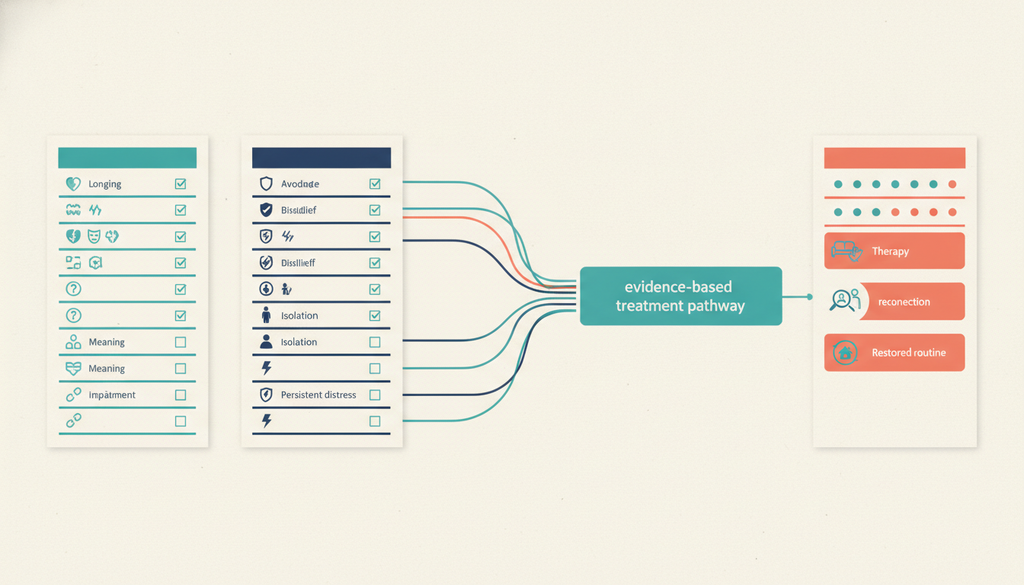
This matters because treatment differs. Grief focused work aims to help someone accept the finality of a loss and slowly rebuild a life around it. Depression care targets hopelessness, low motivation, and self critical thinking across the board. Trauma care addresses fear, flashbacks, and the body’s alarm response. Treating only one piece when two or three are present tends to leave someone stuck.
Why Some Forms of Grief Get Overlooked
Ritual matters more than people assume. Funerals, condolence cards, and time off work all send a quiet message that a loss counts. When that message never arrives, whether because a relationship was not legally recognized or because a death happened outside the usual family script, people often stop talking about what they are going through.
Workplace policy makes this worse in practical ways. The United States has no general federal law requiring bereavement leave, and state rules vary widely and usually cover only a narrow list of family relationships. Even where states offer some protection, official state labor guidance for Washington makes clear that private employers generally are not required to provide bereavement leave or pay at all, leaving most of it up to individual company policy. That gap forces many grieving people to use vague excuses at work, ask for unpaid time, or simply push through without any acknowledgment that something significant happened.
Getting Support for Any Type of Grief
You do not need a perfect label before asking for help, but naming what you are feeling does make it easier for a clinician or support group to respond well. A short screening study on brief grief tools found that a handful of simple questions, covering things like difficulty accepting the death and feeling distant from others, can flag when grief needs a closer look. That kind of quick check is not a diagnosis. It is a starting point for a fuller conversation.
If your grief includes daily longing that will not ease, thoughts of wanting to die to be reunited with someone, hopelessness that has spread beyond the loss itself, or fear and flashbacks tied to how someone died, that is a sign the grief has moved past what time alone tends to resolve. The same is true if you feel forced to hide a loss because you worry no one will take it seriously. None of these patterns mean something is wrong with you as a person. They mean the loss deserves real attention rather than a quiet expectation that you should already be over it.
If grief has tipped into constant hopelessness, exhaustion that will not lift, or thoughts that scare you, you do not have to sort through it alone, and reaching out about a depression therapy program can help you find steady footing again.

