
Individual counseling is private, one on one talk therapy where you meet regularly with a licensed therapist to work through a specific problem, at your own pace and on your own terms. A commonly cited study found that more than half of clients showed real improvement by their eighth session, though many people notice small shifts even sooner. This guide walks through what individual counseling actually looks like, the main therapy styles you might encounter, and how you and your therapist will know it is working.
What Is Individual Counseling?
At its core, individual counseling is a structured relationship between you and a therapist built around your goals. It starts with an intake session, where the therapist asks about your current concerns, history, daily functioning, and what you want to change.
A good intake covers more than symptoms. Your therapist will likely ask about your relationships, sleep, work, past treatment, and what has helped or not helped before. This information shapes a working plan rather than just a label. Two people with the same diagnosis can need very different kinds of help, depending on what is actually keeping them stuck.
Safety is part of this conversation too. If you mark that you have thoughts of hurting yourself on an early questionnaire, expect your therapist to ask direct follow up questions rather than treating that single answer as the full picture. That kind of careful, suicide risk assessment is standard practice, not a sign that something is wrong with you.
How Does One on One Therapy Actually Work
Once the intake is done, individual therapy becomes a repeating cycle rather than a fixed script. You and your therapist agree on a starting approach, try it, check whether it is helping, and adjust.
This is different from what a lot of people expect. Many assume therapy means picking a diagnosis, matching it to one treatment, and following that treatment until it ends. In practice, the plan often shifts as your therapist learns more about what maintains your difficulties, whether that is avoidance, harsh self criticism, unstable emotions, or old relationship patterns that keep repeating.
You should expect regular check ins about whether the approach still fits. If something is not working, that is useful information, not a failure on your part.
Common Approaches Used in Individual Therapy
Several well established approaches show up in individual counseling, and each one targets a different pattern.
- Cognitive behavioral therapy, known as CBT, DBT, and ACT style approaches, focuses on the links between thoughts, feelings, and behavior.
- Dialectical behavior therapy adds skills for intense emotions and unstable relationships.
- Acceptance and commitment therapy helps you change your relationship to difficult thoughts instead of fighting them.
- Trauma focused options, including EMDR and other trauma focused treatments, address memories and beliefs tied to past events.
- Psychodynamic therapy looks at repeated relationship patterns and how they connect to earlier experiences.
| Approach | Best fit for |
| CBT | Depression, anxiety, avoidance, unhelpful thought patterns |
| DBT | Strong emotions, impulsive behavior, unstable relationships |
| ACT | Getting stuck fighting your own thoughts and feelings |
| EMDR and trauma focused therapy | PTSD, trauma memories, trauma related guilt or fear |
| Psychodynamic therapy | Long standing relationship patterns and identity concerns |
No single approach wins across the board. Even for PTSD, where several trauma focused therapies have strong support, research has not found one that clearly beats the others for every person. The right fit depends on your symptoms, your preferences, and what your therapist is trained to deliver well.
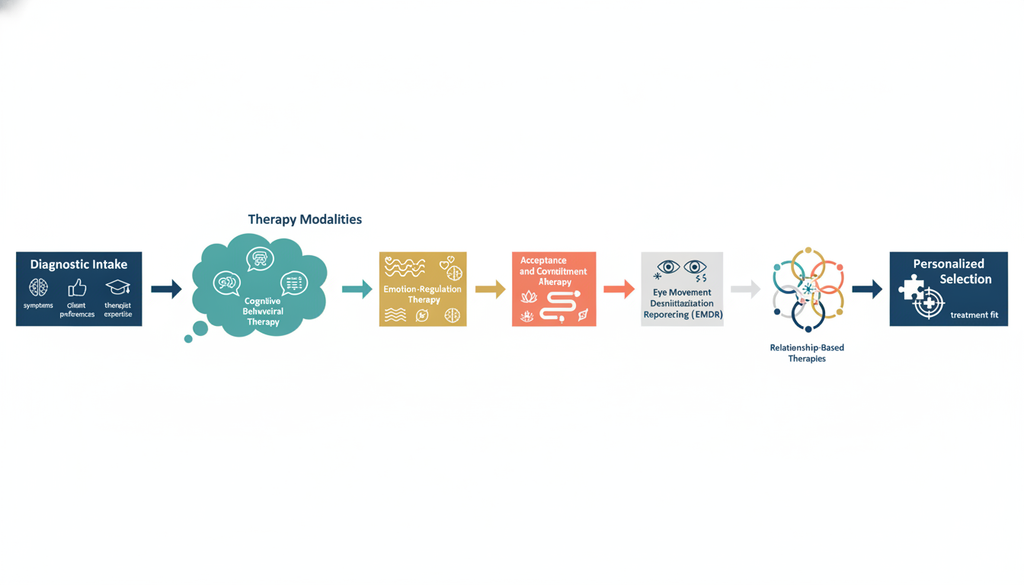
How to Choose the Right Type of Individual Counseling
Choosing a modality is less about your diagnosis and more about what is actually driving your distress day to day.
Ask yourself and your therapist a few practical questions. Does your struggle look like withdrawal and low energy, or racing thoughts you cannot turn off? Is it hard to tolerate strong emotions without acting on them? Do you keep ending up in the same kind of painful relationship? Your answers point toward different starting places.
Your preferences matter here too. If a structured, skills based approach feels right to you, CBT or DBT might be a strong starting point. If you would rather explore where certain patterns came from, psychodynamic work may fit better. A therapist should explain the reasoning behind their suggestion rather than simply assigning a method.
How Many Sessions Does Individual Therapy Take
This is one of the most common questions people ask before starting, and the honest answer is that it depends, though research gives useful ranges.
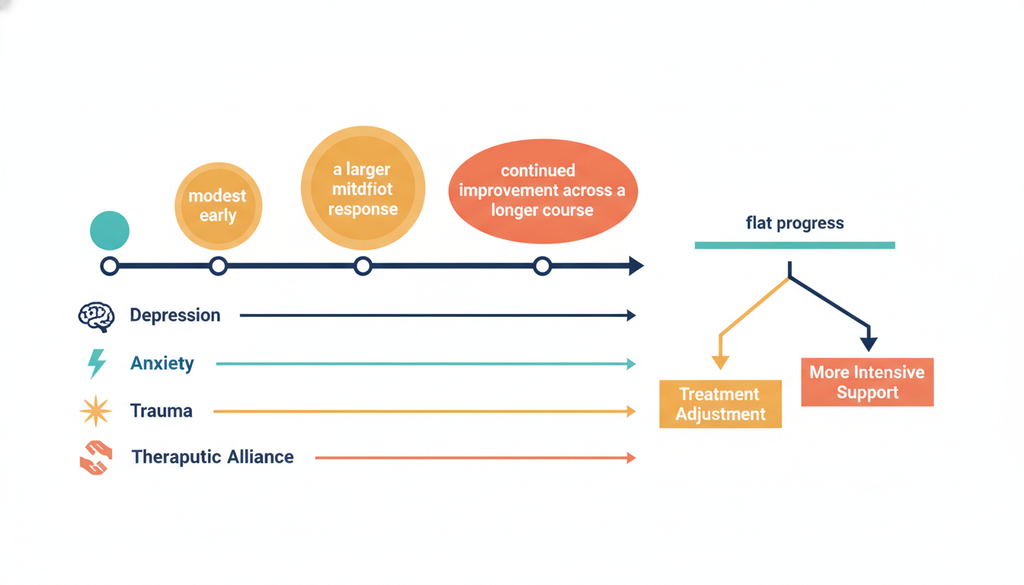
Older research on the pace of change found that about 30 percent of clients improved by their second session, 53 percent by session eight, 74 percent by session 26, and 83 percent after roughly a year of weekly therapy. Later work using stricter standards for real recovery, not just early improvement, estimated that about half of clients reached full recovery somewhere between 15 and 19 sessions.
Frequency matters too. One large trial found that adults with depression who attended twice weekly sessions of CBT or interpersonal therapy responded faster and dropped out less than those attending once a week, though the long term picture evened out somewhat over time.
The practical takeaway is simple. Expect some early movement within the first several sessions, but plan for a course of treatment measured in months, not weeks, if you want lasting change.
How Progress Gets Tracked During Treatment
A well run individual counseling process does not rely on gut feeling alone. Most therapists use brief questionnaires to track depression, anxiety, or trauma symptoms over time.
Common tools include the PHQ-9 for depression, the GAD-7 for anxiety, and the PTSD symptom checklist known as the PCL-5. Alongside these, many therapists use simple rating scales that ask how you are doing overall and how well that day’s session actually fit your needs. This kind of outcome and alliance feedback helps catch problems early, before you quietly lose faith in the process and stop showing up.
Scores are not verdicts. A number staying flat for a few weeks does not automatically mean therapy has failed. But if scores stay flat for six to eight sessions while you keep attending and doing the work, that is a fair moment to name it and ask what should change.
The Core Benefits of Individual Counseling
The individual counseling benefits people describe most often go beyond simple symptom relief. You get full attention on your own situation, without splitting time with a group or family members. You set the pace. You can be direct about things that feel too private for a group setting.
There is also a practical benefit tied to fit. Research on matching clients to the right therapist and approach found meaningfully better results for those in a data informed personalized treatment matching process compared with standard assignment. In plain terms, therapy tends to work better when the therapist, the method, and the person actually line up, and individual counseling gives you the room to adjust that fit as you go.
Over time, many people also gain a clearer sense of their own patterns, better tools for handling hard emotions, and steadier relationships, not just lower scores on a questionnaire.
When One on One Therapy Isn’t Enough
Weekly individual sessions are not always the right level of support. If you are having frequent crises, cannot stay safe between appointments, or need coordinated help with substance use, medication, or daily structure, a single weekly meeting may not be enough on its own.
Signs that it may be time to discuss a higher level of care include repeated emergency visits, escalating self harm, or feeling like your therapist has become your only source of crisis support. This is not a failure of therapy. It usually means your needs have grown past what one weekly hour can reasonably hold, and a program with more structure, like an intensive outpatient option, can pick up where individual sessions leave off.
Why This Matters for You
Individual counseling works best when it is treated as a living process, not a fixed appointment on your calendar. The right approach, a realistic sense of how long change takes, and honest check ins about whether things are actually moving all matter more than which specific therapy label gets used.
If you are weighing whether to start, or wondering whether your current sessions still fit, that question is worth asking out loud with your therapist rather than sitting with it alone.
If you are ready to talk to someone, Summit Wellness Group’s individual therapy program can help you find an approach that actually fits your goals and your pace.

