
Losing someone you love can leave you searching for people who actually understand what you are going through, and that search often leads to grief support groups. Grief support groups connect you with others who get it, and by law most hospices must offer bereavement services free for up to a year after a death. This guide walks through what to expect, how these groups differ from grief group therapy, and how to find one near you or online.
What to Expect From Grief Support Groups
Most grief support groups are built around one simple idea: you should not have to carry loss by yourself. A room, or a screen, full of people who have also lost someone can offer something friends and coworkers often cannot, which is a sense of being understood without having to explain everything.
A recent scoping review of bereavement support guidelines found that peer connection, practical information, and reduced isolation are the main benefits mourners report from these gatherings. You will usually find a mix of check ins, shared stories about the person who died, talk about hard days like anniversaries and holidays, and practical tips for getting through the week. Some groups add light structure, like a short reading or a grounding exercise, but the heart of the meeting is usually just people talking and listening.
Facilitators often have their own history of loss, plus some training in leading a group safely. Good peer leaders should stick to their scope of practice and steer clear of diagnosing anyone or trying to process trauma, since that is not their job and they are not trained clinicians. If a facilitator starts telling people they have a disorder, or promises that group discussion will fix trauma related symptoms, that is a sign the group has stepped outside what peer support can safely offer.
What a Peer Group Will Not Do
A peer group will not diagnose you, treat post traumatic stress, or guarantee that what you share stays private among every member. It also will not replace emergency care if someone is in danger. What it can do is remind you that your reaction to loss, however messy, is not strange.
Peer Support Groups vs Grief Group Therapy
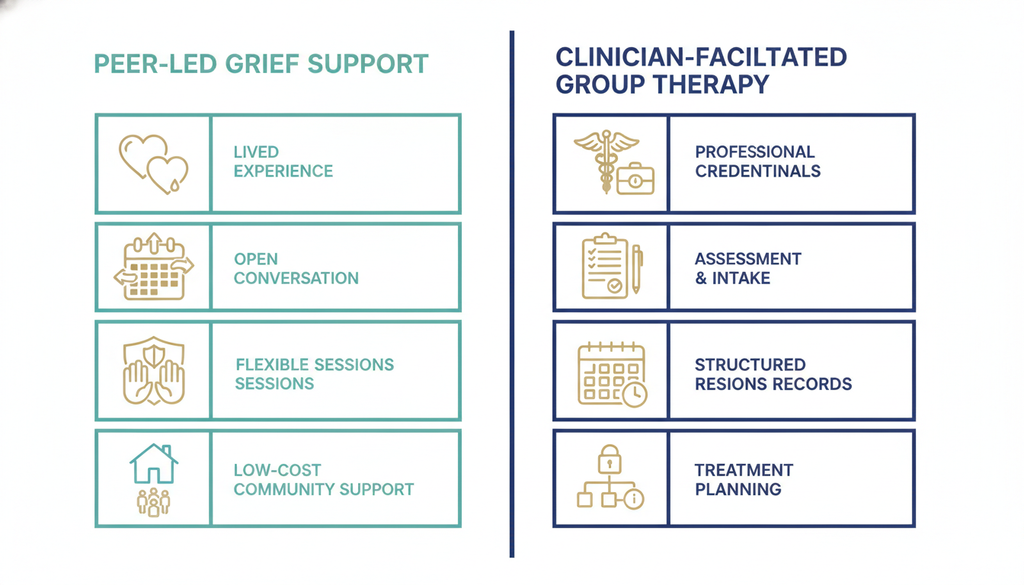
People often use “grief group” to describe very different services, and that mix up causes real confusion. Clinician led grief group therapy follows an actual treatment plan, and a comparison of group therapy and support groups explains how goals, assessment, and ongoing monitoring set it apart from a peer meeting.
The table below breaks down the main differences.
| Feature | Peer Led Support Group | Grief Group Therapy |
| Who leads it | Trained volunteer or peer with lived experience | Licensed therapist or supervised clinician |
| Main goal | Connection, normalizing grief, reduced isolation | Treating symptoms like prolonged grief, depression, or trauma |
| Diagnosis | Never given | Part of the process when needed |
| Structure | Loose, participant driven | Planned sessions with specific techniques |
| Confidentiality | Members are asked to respect privacy but it is not guaranteed | Clinician is bound by professional and legal rules |
| Typical cost | Often free or low cost | May involve insurance billing or private pay |
Grief focused treatments, including structured approaches described in a review of prolonged grief course and treatment options, can run about 16 sessions and directly target the yearning and avoidance that keep grief stuck. That kind of work needs a trained clinician, not a well meaning volunteer, because it involves guiding people through painful material on purpose and watching closely for signs that someone is struggling.
Neither option is automatically better. A lot of grieving people do fine with peer support alone. Others need both, using a support group for connection while working with a therapist on the harder symptoms.
Signs You May Need More Than a Peer Group
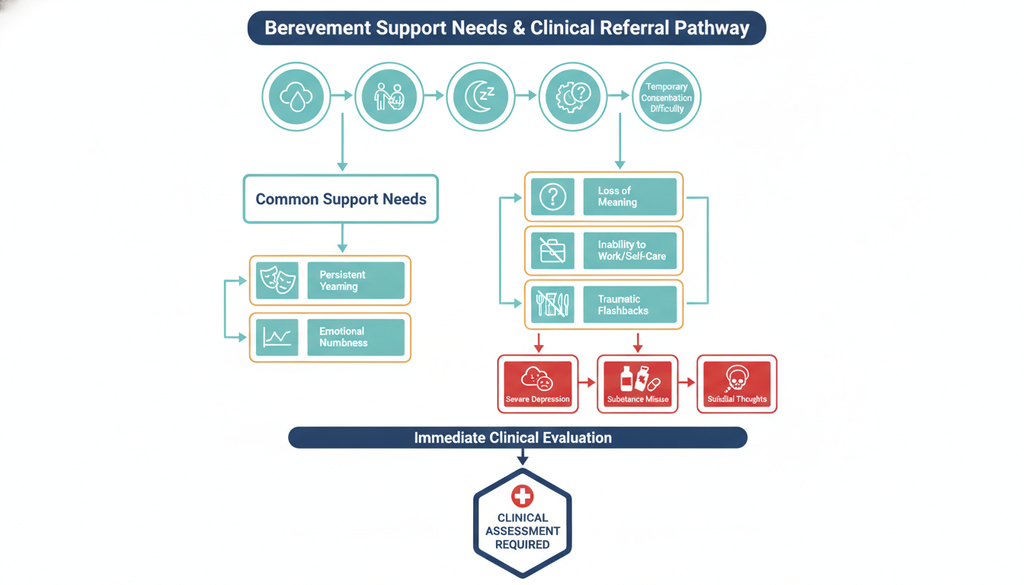
Intense grief in the first weeks or months after a death is not, by itself, a problem to fix. Sorrow, yearning, trouble sleeping, and a short term inability to focus are common and do not mean something is clinically wrong. The American Psychiatric Association defines prolonged grief disorder as grief that stays intensely disruptive most days for at least a month, once 12 months have passed since an adult’s loss, and that also includes several other symptoms like identity disruption, numbness, or a sense that life has no meaning.
That 12 month marker matters for diagnosis, but it should never be a reason to wait if someone is struggling badly right now. Clinical assessment is called for earlier than 12 months when there is severe depression, constant intrusive memories of a traumatic death, heavy substance use, or an inability to function at work or at home.
Suicide risk deserves direct attention rather than guesswork. If someone mentions wanting to die, ask plainly using the kind of direct questions found in the Columbia Suicide Severity Rating Scale, then get them connected to a crisis line or emergency care right away. A peer group is not built to manage that moment on its own, and no facilitator should try to handle it alone.
Watch for these patterns as a signal to look beyond a support group:
- Ongoing inability to work, parent, or care for basic needs
- Persistent thoughts that life has no point, or a wish to be dead
- Nightmares, flashbacks, or panic tied to how the death happened
- Heavy drinking or drug use to numb the pain
- Withdrawal from nearly everyone, with no relief over time
How to Find Grief Support Groups Near You
If you are typing “grief support groups near me” into a search bar, start with the place that already knows the situation. Federal hospice rules require every Medicare certified hospice to keep a bereavement program running for up to a year after a death, offered to family members and others named in the plan of care. Call the hospice that cared for your loved one and ask for the bereavement coordinator, even if the death happened months ago.
Hospitals and health systems are another strong option, especially after a death tied to illness, an ICU stay, or a traumatic event. Programs run through hospitals, like a virtual grief and loss group led by licensed social workers, are worth checking because they usually have clearer screening and crisis procedures than an informal community meeting.
Beyond hospitals and hospices, look at community mental health centers, nonprofit bereavement organizations, faith communities, and funeral homes, many of which host regular bereavement support groups at no cost. Before you commit, ask a few plain questions: who leads the group, is it peer support or actual therapy, is there a cost, and what happens if someone becomes distressed or unsafe during a meeting. A group that cannot answer those questions clearly is worth skipping.
Finding a Grief Support Group Online
A grief support group online can be a good fit if travel, childcare, or a packed schedule make in person meetings hard. But “online group” covers a wide range of setups, from a therapist led video session to an open, unmoderated social media page, and those are not equally safe.
Before joining, check whether the group has any kind of registration or screening process, clear rules about privacy and recording, and a plan for what happens if a member says something alarming. Samaritans’ virtual suicide loss groups show a solid model, since they ask new members if they feel ready to join before starting and offer one on one peer visits instead when someone is not sure. That kind of readiness check protects both the new member and the rest of the group.
Unmoderated groups can still offer comfort, but treat them as a place to read and connect lightly rather than a place to bring a crisis. If you are in immediate danger or supporting someone who is, an online forum is not the tool for that moment.
Bereavement Support Groups for Specific Losses
General bereavement support groups work well for a lot of people, but loss specific groups can feel more relevant, especially after a death that carries extra weight, like suicide, overdose, homicide, or the death of a child. Sharing space with people who lost someone the same way you did tends to cut down on the feeling that no one really gets it.
Research on complicated grief treatment notes that identification with other group members affects how much a group actually helps, which is part of why specialized networks exist for bereaved parents, suicide loss survivors, spouses, and people grieving a death connected to military service. If a general group does not feel like the right fit, look for one built around your specific kind of loss before giving up on groups altogether.
Why the Right Fit Matters
Grief support groups and grief group therapy are not competing options, they are different tools for different moments. A stepped model of bereavement care, where universal information and peer support come first and clinical treatment is added when needed, protects against two real mistakes: treating ordinary grief like a disorder, and leaving someone with disabling grief to manage alone in a peer meeting that was never meant to treat trauma or depression.
The honest goal is matching the level of support to what you actually need right now, and being willing to add clinical care later if things do not ease up. Grief changes over time, and so can the kind of help that makes sense.
If grief has tipped into depression, constant dread, or thoughts of not wanting to be here anymore, that is worth talking to someone about directly. Summit Wellness Group’s depression treatment program can help you sort through what is grief and what has become something heavier, so you are not left guessing on your own.

